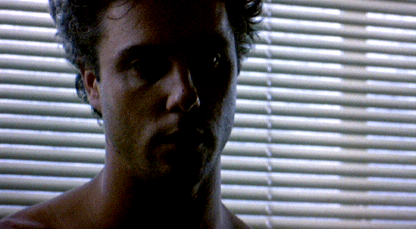
Showing posts with label Dean Stockwell. Show all posts

Friday, July 17, 2026

BLUE VELVET (1986)

Director: David Lynch

Writer: David Lynch

Producer: Fred Caruso

Cast: Kyle MacLachlan, Isabella Rossellini, Dennis Hopper, Laura Dern, Dean Stockwell, George Dickerson, Hope Lange, Priscilla Pointer, Frances Bay, Fred Pickler, Brad Dourif, Jack Nance, J. Michael Hunter, Ken Stovitz, Jack Harvey, Jon Jon Snipes, Dick Green, Peter Carew, Leonard Watkins, Moses Gibson, Philip Markert, Selden Smith, Donald Moore, A. Michelle Depland, Katie Reid, Michelle Sasser, Sparky (the dog), Angelo Badalamenti, Jean Pierre Viale, Robert J. Maxwell (uncredited)

When his father (Jack Harvey) suffers a health crisis, college student Jeffrey Beaumont (Kyle MacLachlan) returns to his small hometown of Lumberton, North Carolina. While walking home from visiting his father in the hospital, Jeffrey discovers a severed, human ear lying in a field. He brings the body part to Detective Williams (George Dickerson) at the Lumberton Police Department. Jeffrey’s curiosity is roused, and he learns from Detective Williams’ daughter, Sandy (Laura Dern), that she overheard her father often mentioning the name of Dorothy Vallens in connection to his other current cases. Vallens (Isabella Rossellini) is a local nightclub singer whose apartment is near the field where Jeffrey found the severed ear. Jeffrey begins his own investigation by sneaking into the singer’s apartment. The young amateur sleuth is soon embroiled in the dangerous circumstances of Dorothy Vallens’ life.

The Flashback Fanatic movie review

I have never been a fan of films that are so obtuse or personal on the director’s part that I can’t possibly interpret them as having any meaning or narrative coherence. Directors creating such works will probably write everyone off who does not “get it” as either being ignorant or wanting to be spoon fed all their entertainment. Such directors are usually affecting cultural and intellectual superiority, when they can’t just admit that they are so self-indulgent that they won’t bother to tell a story well. The late filmmaker David Lynch often comes perilously close to fitting into that category, yet his work can usually hold my attention.

The recent passing of David Lynch has prompted me to revisit some of his films. He is such an idiosyncratic filmmaker that his work can be interesting and head-scratching (Lost Highway-1997) or utterly confusing and irritating (Inland Empire-2006). Nevertheless, each of his films seems to establish a mood all their own, which is probably why David Lynch has inspired the stylistic term “Lynchian.”

Although I am trying to reacquaint myself with some David Lynch films and have not seen all his work, I will probably always feel that Blue Velvet is THE David Lynch movie. I think it is the most accessible of his films, while it still benefits from those touches of Lynchian weirdness.

Now, I suppose that the more erudite among you are probably poopooing me as the most shallow of Lynch-film watchers. Sure, this schlockoholic likes Blue Velvet because it fits a genre and has a coherent plot. However, what I like most about the film are the oddball characters with behaviors we can’t quite understand, but can try to interpret, and the bits of incongruous humor. These are things that do not appear just to fulfill any mystery story or crime drama expectation. They add a grotesque flair to this genre film that makes it distinctive and offbeat, just as any dangerous and bizarre experience should feel to both the film’s protagonist and the audience.

Artist that David Lynch is, he also presents imagery that can be a bit perplexing, causing us to ask: Why do we need to see bugs crawling beneath the front yard of a cozy home in the suburbs, and why must we zoom into the dark abyss of a severed ear? These stylistic touches are meant to be disturbing and perhaps never intended to make any sort of statement. We may attach meaning to them or simply be a bit weirded out. Either reaction serves to make this movie unique and atmospheric without making a jumble of the story.

I am certainly not the first to state that Blue Velvet is about corruption. More specifically, I think it is about the perception of that corruption; a filmic painting displaying corruption in contrast to the idyllic setting it infests. That corruption is not presented as a process. Rather, it is shown as already established and perhaps intrinsic to all things. An example of this is the front yard in that postcard-perfect slice of American suburbia teeming with voracious insects that seem engaged in an unsavory orgy of consumption, copulation, or combat. That thriving nastiness has always been there just beneath the proper, placid surface.

Such a perspective applies to the some of the denizens of Lumberton. The police department has a corrupt detective who has been in cahoots with the criminal element long before the story begins. The Lumberton criminals we meet are presented, without any backstories, brandishing their eccentricities to leave us wondering how such behaviors became instilled in them. This sudden confrontation with unpredictable evil leaves us just as unnerved as Jeffrey Beaumont, the young hero of the story. As most of the narrative is from Jeffrey’s perspective, there is no storytelling cause-and-effect preparation helping us assimilate to the unsettling reveal of the corruption already underway in idyllic Lumberton.

The corruption element can also taint the seemingly decent people we are inclined to root for. Our hero, Jeffrey Beaumont, becomes ensnared in the dangerous situations resulting from local chanteuse Dorothy Vallens being controlled and abused by local criminal Frank Booth. At first, it seems that Jeffrey is simply an impetuous, young adventurer wanting to find clues to a crime. Once we see him hiding in Dorothy Vallens’ apartment spying on the distraught, beautiful woman, we may be seeing him indulging his voyeurism. This aspect of Jeffrey’s character was made much clearer in some excised footage meant to take place earlier in the story that underscored Jeffrey’s conflict between his prurience and his basic decency. We are shown corruption as something everyone must grapple with.

Kyle MacLachlan made his feature-film-starring debut in David Lynch’s previous film, the ill-fated, big-budget, 1984 adaptation of Frank Herbert’s science-fiction novel Dune. MacLachlan would also star as FBI agent Dale Cooper, the hero of Lynch’s cult television series Twin Peaks (1990–91); its prequel film, Twin Peaks: Fire Walk with Me (1992); and the 2017 television series revival, Twin Peaks: The Return.

As Blue Velvet’s Jeffrey Beaumont, MacLachlan seems guileless, yet his character’s curiosity may be leading him into indulging darker impulses. Of course, our own curiosity is waiting to be sated by Jeffrey’s investigations, so we identify with him, even if his motives may not be totally pure. He still seems moral and is upset by the injustice and brutality he witnesses, but his sensitivity does not make him an infallible hero. Jeffrey Beaumont is both physically and emotionally vulnerable in the dangerous situations he faces.

The daughter of actors Bruce Dern and Diane Ladd, Laura Dern, would begin her acting career at a very young age and have quite a prolific career herself. Like her Blue Velvet co-star Kyle MacLachlan, Dern would continue to work in further David Lynch film projects: Wild at Heart (1990), Inland Empire (2006), and with MacLachlan in the 2017 Twin Peaks: The Return series.

As Lumberton Police Detective John Williams’ teenage daughter, Laura Dern’s Sandy seems to be the most unsullied character in Blue Velvet’s community. She becomes Jeffrey’s reluctant cohort in his investigation when he gently coerces her assistance to help him gain access to the apartment of the mysterious Dorothy Vallens. During the rest of the movie, Sandy is Jeffrey’s confidant. Dern’s Sandy has appealing, nice-girl chemistry with MacLachlan’s Jeffrey. She also expresses the film’s theme of lurking corruption when she half-jokingly tells Jeffrey, “I don’t know if you’re a detective or a pervert.”

Our neo-noir femme fatale here is Isabella Rossellini. She is shrouded in mystery and misery as The Slow Club’s lounge singer, Dorothy Vallens. This was only the Italian actress’s second American film, and Rossellini gives a very brave performance. Her character is only glamorous when in the nightclub spotlight. The rest of the time, we see her as a tragic and tortured woman on the verge of a nervous breakdown. Her beauty entices Jeffrey Beaumont, and her plight earns his sympathy and compels him to continue his risky investigation.

If ever there was a scene-stealing performance, it is Dennis Hopper’s as the despicable Frank Booth. He is full of bizarre quirks and outbursts that are usually profane and threatening or funny. His psychotic temperament drives his every scene to an unpleasant conclusion. Frank Booth is the volatile thug that has made Dorothy Vallens his virtual prisoner. Frank seems to actually revere Dorothy as he cries during her nightclub performance of “Blue Velvet.” Otherwise, she is nothing but his long-suffering slave. While we hate his guts, we still see he has some unspoken mental conflicts probably responsible for his manic and violent behavior.

Dean Stockwell manages the impossible feat of stealing his single scene in the film from Dennis Hopper. As the “suave” Ben, Stockwell is an eccentric criminal crony of Frank Booth, yet another of the many oddballs in the criminal underworld of Lumberton. There is really no plot purpose served by Ben and his scene; it is just a weird and wild stop during Frank’s nighttime road trip. This adds to the unpredictable nightmare vibe of the film.

Although now regarded as a classic from an important filmmaker, when Blue Velvet was first released, many were either nonplussed or offended. This was no mere crime thriller; while it dallied in the genre, its main goal was to evoke a unique atmosphere by contrasting the comforting stability of small-town America with the unsettling reveal of lurking, inexplicable evil. Whether you call it a mystery yarn, crime drama, or neo-noir, Blue Velvet is stylized filmic fabric hung from the genre curtain rod. It needs that genre support for its display, but its style is what intrigues, shocks, and fascinates.

Sunday, August 31, 2025

PAPER MAN (1971)

Director: Walter Grauman

Writers: James D. Buchanan, Ronald Austin, adapted from Anthony Wilson’s story

Producer: Anthony Wilson

Cast: Dean Stockwell, Stefanie Powers, James Stacy, James Olson, Tina Chen, Elliot Street, Ross Elliot, Jason Wingreen, Dan Barton, Len Wayland, Dean Harens, Marcy Lafferty, Robert Patten, Sue Taylor, Johnny Scott Lee, Bob Golden, Craig Guenther

A credit card issued to a Henry Norman is mistakenly sent to the university address of Joel Fisher (Elliot Street). The young college student shares the instant credit with his campus friends Karen McMillan (Stefanie Powers), Jerry (James Stacy), and Lisa (Tina Chen). Joel commemorates their good fortune by assembling an effigy out of computer paper sheets representing the anonymous Henry Norman. Then the four students all use the credit card to go on a modest spending spree. Apparently, the bank realizes their credit card mailing address mistake and mails a request for more information to confirm the identity of the Henry Norman the students have appropriated. Jerry convinces computer science student Avery Jensen (Dean Stockwell) to use the university’s massive, time-sharing computer to establish a complete identity for Henry Norman that will satisfy the bank. However, the four students soon notice an unknown “Henry Norman” is making additional purchases on their credit card. Then they are soon being targeted by a series of deadly, computer-directed mishaps.

The Flashback Fanatic movie review

The Frankenstein syndrome is an affliction we have had centuries of warning about; that which man creates can destroy him. It is not just the reckless shenanigans of the lone mad scientist we need to be wary of. The efficiencies of man’s computerized infrastructure can delete us if we are not careful. Unfortunately, as with other man-made threats to our very existence, we may reach the point of no return before we get serious and make a concerted effort to control what we create. After all, in the meantime there are still more bucks to be made and more blogs to write, dammit!

Even though I have not turned one lousy cent infesting the worldwide web with my digital drivel, I will do my penance by spreading more technophobia. We get all too many reminders of how the internet that has ensnared our civilization can be exploited by scammers and hackers to steal our money and identities. That will be the least of our worries if AI becomes truly sentient. Movies like 2001: A Space Odyssey (1968) and Colossus: The Forbin Project (1970) sounded the alarm by extrapolating the dangerous consequences of computer technology. 1971’s CBS network television movie Paper Man also does so on a more intimate level.

This is one of the earliest television terrors I dimly recall seeing as a kid. Most of it went right over my head. Back in 1971, computers were remote tech to the general public. Those electronic brains were always housed someplace else for mysterious government and business purposes. We still had the comfort level of treating computers as that Buck Rogers stuff which was not going to intrude too personally into our lives. Paper Man gets personal.

This is a slow burn story that sets the stage with a very down-to-earth scenario. College students without decent credit ratings can charge purchases with the credit card they mistakenly receive due to a computer glitch. The lucky accident allows them to buy now and pay later. Soon, they are going to pay much more than they bargained for.


Director Walter Grauman helmed quite a few made-for-TV thrillers. Based on this film, I look forward to discovering more of his work. There is an effort made to light things with more shadows and contrast than a lot of the bland cinematography found in assembly line television productions of the day. During some intimate or tense dialogue exchanges, the lighting of faces helps focus our attention on the characters. One really bravura sequence uses a succession of corridor lights turning off to suggest someone is being stalked by technology.

Former child actor Dean Stockwell stars as the introverted computer genius and grad student Avery Jensen. The contrast of his long, curly hair with his suit-and-tie wardrobe makes for an eccentric presence. We eventually find out why he is such a repressed personality. It is probably his social awkwardness and isolation that make him amenable to the flattery of the pushy Jerry and the friendliness of the beautiful Karen.

Stefanie Powers achieved her greatest fame co-starring with Robert Wagner as the rich, husband-and-wife team of mystery solvers in the Hart to Hart television series (1979–84) and in eight additional made-for-television movies from 1993 to 1996. In Paper Man, Powers’ character of psychology major Karen McMillan is intrigued by the reclusive Avery Jensen. She could easily hook up with handsome med student Jerry, yet she finds the mild-mannered computer scientist an interesting challenge to connect with.

The persistent and manipulative Jerry sends Karen over to Avery’s apartment to persuade him to work more of his programming wizardry to bolster their fraudulent Henry Norman credit identity. Actors Stockwell and Powers work wonders with this low-key scene. The introverted recluse immediately impresses his unexpected guest with the neatness of his apartment, and he has a great finishing move of serving the lady beer in a glass. Couldn’t have done better myself. Then Avery one-ups me by explaining computer binary code to Karen. Her gentle reaction of amused incomprehension causes a subtle flicker of social defeat to pass over Avery’s face. This tells us so much about this poor guy’s inability to connect with people. Nevertheless, Avery wins over Karen. Man, just what brand of beer was he serving?

Another nice performance is James Stacy as Vietnam vet-turned-medical student Jerry. Initially, Jerry seems like the charismatic leader of the pack. His interest in Karen is stated early on, but he is never too pushy about it. As the story develops, we notice an opportunistic aspect to his character that is off-putting, but he still doesn’t seem absolutely despicable. We just see a seemingly ideal guy reveal some flaws in his character that create friction within his clique.


Joel (Elliott Street) and Lisa (Tina Chen) round out the group of small-time credit fraudsters. It is Joel’s good fortune mistakenly receiving the credit card that leads to misfortune for all involved. Lisa is featured in the movie’s creepiest sequence.

James Olson is an interesting casting choice. He had been heroic leads in two worthy sci-fi flicks: Moon Zero Two (1969) and The Andromeda Strain (1970). Here, Olson is cast against type as ineffectual university computer technician Art Fletcher. Once he learns of the Henry Norman fraud, Fletcher expresses concern and tries offering advice to the scamming students, but he is consistently ignored. This defiance leads to grave consequences.

Paper Man is suspenseful fun, but it is also quite a forward-thinking film that predicts the malevolent uses of computer technology we now hear about every day. The film also suggests some of the out-of-control actions technology may be capable of in our not-so-distant future. Back in 1971, we thought computers were just the province of the eggheads in labcoats and the rest of us could live in blissful ignorance of technology we did not use or understand. Nowadays, too many of us still live in blissful ignorance embracing the convenience of this technology we have become dependent on. However, most of us still have no more understanding of how this stuff really works than we do about the radios we listen to, the televisions we watch, or the automobiles we drive. Just being comfortable using technology will not keep us safe when it can think for itself.

Friday, November 15, 2024

TO LIVE AND DIE IN L.A. (1985)

Director: William Friedkin

Writers: William Friedkin, Gerald Petievich (adapting his novel)

Producer: Irving H. Levin

Cast: William Petersen, Willem Dafoe, John Pankow, Darlanne Fluegel, Debra Feuer, John Turturro, Dean Stockwell, Michael Greene, Steve James, Robert Downey, Sr., Christopher Allport, Valentin de Vargas, Jack Hoar, Michael Chong, Michael Zand, Jackely Giroux, Jane Leeves, Donnie Williams, Earnest Hart, Jr., Gary Cole (uncredited), Jason Ronard (uncredited) 

U.S. Secret Service agent Jimmy Hart (Michael Greene) is killed two days before his retirement by Los Angeles counterfeiter Eric “Rick” Masters (Willem Dafoe). Hart’s young partner, Richie Chance (William Petersen), vows to avenge Hart by doing anything it takes to arrest Masters. 

The Flashback Fanatic movie review 

I have almost no use for action movies anymore. I can still enjoy a vintage Clint Eastwood, Charles Bronson, or Chuck Norris flick. However, these days when almost anything one can imagine can be portrayed on the screen, the main focus for many films is just trying to outdo images of what has gone before. Spending more money on CGI and green screen effects never makes a script better. When all else fails, filmmakers will resort to shaky cam and fast cut editing to try fooling us into thinking something is evermore intense while neglecting good storytelling. All of this excess is a waste, because the action is usually so contrived that it becomes ridiculous. Worst of all is that the characters involved in these feats are usually interchangeable, snarky badasses trying to ape James Bond, Dirty Harry, and Rambo antics in films devoid of wit or grit. 

By the mid-1980s, I was already becoming aware of the action films’ idiotic excesses, as they were becoming a specific and generic genre. That’s why To Live and Die in L.A. was a refreshing kick in the ass. It is a neo-noir film and crime thriller that has style without larger-than-life heroics. Actually, the only character in the film that seems truly heroic is Jimmy Hart, the veteran U.S. Secret Service agent who is killed off early in the film. 


Probably the real reason that To Live and Die in L.A. flirts with the action film label is that it has a long and exciting car chase rivaling director William Friedkin’s other epic achievement of motorized mayhem in 1971’s The French Connection. There are no other action set pieces in the film; only brief foot chases and quick bursts of violence. What we witness are not superhuman feats and physics defying stunts, but rash and ruthless acts that give this film an edge. 

The two main protagonists are, as director Friedkin puts it, two sides of the same coin. Both U.S. Secret Service agent Richie Chance and counterfeiter Rick Masters are involved in risky professions that cross personal and legal boundaries. Chance seems driven not only by his one honorable sentiment of avenging his partner’s death; he gets an adrenalin rush facing danger. Masters affects a hip and avant-garde persona as a frustrated artist while making a living as a counterfeiter who must often resort to cold-blooded acts of violence. These two men are deliberate and unrepentant about how they achieve their objectives. It is probably no accident that both characters have similar first names. Ironically, the actors portraying them, William Petersen and Willem Dafoe, also have nearly identical first names. Dafoe’s actual given first name at birth was William. 

In this very early film role, William Petersen is really fine as our “hero.” His Richie Chance probably approaches his job as a macho challenge that gives him the same sense of satisfaction as his bungee jumping off of a bridge. Initially, we are probably going to think such a gung-ho attitude makes him someone to admire. We can also empathize with his payback agenda against Rick Masters, even if Chance steps over the legal line to try nailing him. However, Chance already has a history of ruthless behavior. He has been using parolee Ruth Lanier (Darlanne Fluegel) sexually and as his informant. If she does not cooperate, he will get her parole revoked. Frankly, U.S. Secret Service agent Richie Chance is an asshole. 


Another standout performer here who was also about to achieve stardom is Willem Dafoe. His hip and cold-blooded counterfeiter, Rick Masters, is one of my favorite villains. When dealing with anyone in his illegal line of business, he is utterly deadpan. Masters doesn’t raise his voice, even in the most violent situations, and he will savor the moment with an irreverent comment before pulling the trigger. His motivations are never explained, yet we see his artistic endeavors that he seems conflicted about. Masters might be trying to purge some inner turmoil though his art, but it is the technical application of his talents making counterfeit money that fulfill his comfortable and unconventional lifestyle. 


John Pankow, as Chance’s new partner, John Vukovich, gives us the clearest indication of just how extreme and out of control these situations have become. He wants to be a by-the-book agent, while still being loyal to his partner. Like Chance, he feels a need to prove himself, if only because he comes from a family of policemen. In a world full of sociopaths and users, Vukovich is being tested and incredibly stressed. He reminds us of the very real physical and legal dangers involved in his career and his association with his reckless, fellow agent. 


Friedkin made a deliberate choice to depict the seamy side of Los Angeles. We spend our time in taverns, a strip club, prison, warehouses, small apartments, and the streets of East L.A. The poshest accommodations shown are those of counterfeiter Rick Masters and the sleazy lawyers (Dean Stockwell and Christopher Allport) that he associates with. (Who says crime does not pay?) Striking shots of sunrises and the catchy, synthesized soundtrack by Wang Chung (Jack Hues and Nick Feldman) compliment the mood of this environment perfectly. All of this seems bleak and a bit surreal. Such an atmosphere suits the attitudes in a film that Friedkin says is about a counterfeit world; the money and the relationships in this neo-noir tale are fake.
 

Despite the stylistic trappings of the film, it always rings true. No one is portrayed as infallible and pure. The main protagonists, Chance and Masters, are polar opposites in temperament. But aside from Agent Chance’s noble goal of bringing his partner’s killer to justice, he can be just as unpleasant as the criminal Masters. Director Friedkin stated that he was depicting the very thin line between law enforcers and lawbreakers. 

This film is distinguished by its authenticity. The co-screenwriter and author of the original novel, Gerald Petievich, was actually an agent of the U.S. Secret Service. In an early scene, we see the creation of Rick Masters’ funny money; courtesy of the ex-con counterfeiter that the film employed to show us all how it is done. Unfortunately, a kid of the film’s prop master tried to pass one of the phony bills at a store, which resulted in the real U.S. Secret Service hassling director Friedkin and his poor prop master. 

To Live and Die in L.A. is an unsentimental reflection of ’80s attitude. Duty and machismo is shown to be as shallow as greed and fashion. The film plays the flip side of the crime thriller by refusing to romanticize the motives or abilities of its protagonists. It does so with a sense of style and ends on a nihilistic and almost mystic note. That makes this movie far more memorable than any of the era’s typical macho fantasies about saving the day with bullets, explosions, and wisecracks.

STANLEY (1972)

Director: William Grefé Writers: Gary Crutcher, William Grefé Producer: William Grefé Cast: Chris Robinson, Alex Rocco, Steve Alaimo, Ma...