Showing posts with label superhero. Show all posts

Wednesday, May 7, 2025

THE SIX MILLION DOLLAR MAN (1973)

Director: Richard Irving

Writers: Henri Simoun (Howard Rodman) adapting Martin Caidin’s novel Cyborg

Producer: Richard Irving  

Cast: Lee Majors, Martin Balsam, Darren McGavin, Barbara Anderson, Ivor Barry, Charles Knox Robinson, Anne Whitfield, Maurice Sherbanee, Robert Cornthwaite, Olan Soulé, Dorothy Greene, Norma Storch, George Wallace, John Mark Robinson

Former astronaut Steve Austin (Lee Majors) crashes during his test flight of an experimental aircraft for NASA. His injuries include the loss of his left eye, right arm, and both legs. Austin’s friend and attending physician, Dr. Rudy Wells (Martin Balsam), is approached by Oliver Spencer (Darren McGavin), the director of a government agency called the Office of Strategic Operations. Spencer is aware of Dr. Wells’ theories regarding the replacement of human limbs with functioning, lifelike, mechanical substitutes. He supplies Dr. Wells the millions of dollars needed to reconstruct Steve Austin into a cyborg (part man and part machine). After the surgery and recuperation, Spencer wants to employ Austin’s cyborg abilities on special missions for the OSO. However, Steve Austin is despondent about his strange, new condition and is reluctant to have any more to do with the government.

The Flashback Fanatic movie review

The Six Million Dollar Man has always been a favorite movie of mine. When this boob tube brat saw its first broadcast on the ABC network, I just knew that it had to become a series. At that time, I had no idea that television films were ever made in the hope that high ratings would justify the development of an ongoing series; I was just so buzzed about it that I thought fate somehow had to intervene to make me happy by providing a weekly dose of this as a new video vice. Aside from its status as the pilot for the iconic 1970s television series (which inspired a succession of other superhero programs), The Six Million Dollar Man is terrific as a stand-alone science fiction film and was nominated for a 1974 Hugo Award.

This TV-movie is a streamlined adaptation of Martin Caidin’s 1972 novel Cyborg. He would write three sequel novels about his part-man and part-machine hero, Steve Austin. Caidin had an aviation and aeronautics background and wrote novels about World War II and space travel. His science fiction included current technological innovations and their future development and application. Caidin’s earlier 1964 novel Marooned (about the attempt to rescue NASA astronauts orbiting the Earth) had been made into the 1969 movie. Caidin first used the word “bionics” in his 1968 science fiction novel The God Machine, but he did not actually invent that term. (Don’t feel bad; I only just discovered that on my smart phone a minute ago.) Of course, it is The Six Million Dollar Man television series that made bionics a household word. Although Caidin’s novel refers to the technology implanted into his hero’s body as bionics, that term is never used in this pilot film.

The opening scene of the movie is the desert-based airstrip where NASA and the U.S. military are about to conduct an experimental test flight. This is the setup for the tragedy that puts the plot in motion and establishes the plight for our hero, former astronaut and test pilot Steve Austin. He makes a distinctive entrance that establishes his personality and foreshadows his fate. We first see Steve Austin as a lone figure approaching from a distance on a morning stroll returning from the barren desert onto the airstrip. This visually suggests Austin’s independence and his imminent isolation as a technological prototype which will eventually lead him to another even more lonely and dangerous desert-bound mission. We see Austin’s camaraderie while he makes small talk with the other NASA personnel as he returns, and we enjoy his nonchalance that irks the uptight general at the airstrip. Austin is immediately established as down-to-earth, confident, and likable. This is efficient storytelling and character building that puts us squarely on Austin’s side within the film’s first few minutes.


Steve Austin’s tragic test flight is very well realized with plenty of NASA stock footage intercut with Austin at the aircraft’s controls and radio chatter between him, escort planes, and the ground crew. The final footage of the ill-fated test flight is of an actual 1967 crash of the M2-F2 lifting body aircraft. That real accident’s NASA test pilot was Bruce Peterson. He was badly injured but recovered. Unfortunately, Peterson lost the sight in one eye due to an infection in the hospital.

Lee Majors was perfect casting for Steve Austin. He has the rugged good looks and athleticism that suit an action hero. Most importantly, Majors has a likability that has us rooting for him while he maintains some emotional reserve that makes us believe he has the discipline and stability to be capable of heroism. Before his acting career, Majors suffered a serious back injury playing college football that left him paralyzed from the waist down for two weeks. One must wonder if the memory of that trauma and the awful suspense of recuperation informed Lee Majors’ performance as the maimed and hospitalized Steve Austin. By 1973 Majors had already starred in three television series and would go on to star in several more. It is with this pilot film of The Six Million Dollar Man that Lee Majors begins his most famous role.


Martin Balsam’s movie immortality was already established as the private detective Milton Arbogast in Alfred Hitchcock’s classic Psycho (1960). He provides great support as Austin’s friend and physician, Dr. Rudy Wells. It is his character’s medical genius that restores our damaged hero to a full-bodied, superhuman state. Balsam’s narration as Wells immediately creates a sense of foreboding as the story begins and later explains the pioneering technology used to rebuild Steve Austin. Balsam’s Dr. Wells is both brilliant and compassionate. In the subsequent series, the role of Wells would be played by Alan Oppenheimer and Martin E. Brooks.

The great Darren McGavin appears in the crucial role of Oliver Spencer, the callous, government bureaucrat that has been planning to fund a cyborg project to create technologically enhanced humans for espionage and military operations. Spencer decides that Steve Austin’s catastrophe presents the perfect subject for a cyborg prototype. Spencer practically steamrolls over Dr. Wells when he presents him the proposition to turn the comatose Steve Austin into a cyborg. McGavin’s performance as the heartlessly pragmatic Spencer is a joy to watch. This role was just one year after McGavin had first portrayed the more admirable character of newspaper reporter Carl Kolchak in the record-setting TV-ratings blockbuster The Night Stalker (1972). That fine film would lead to a sequel, The Night Strangler (1973), and then the weekly series, Kolchak: The Night Stalker (1974-75).

During Steve Austin’s recuperation and reconstruction, Jean Manners is his personal nurse. Her affection for her patient makes the physically rebuilt, emotionally damaged Austin confront his new self-image as a once ideal specimen of manhood that is now partly artificial. Jean Manners is played by incandescent-eyed Barbara Anderson. She had guest-starred on many television series and won the Primetime Emmy Award for her ongoing supporting role of Police Officer Eve Whitfield in the series Ironside (1967-71).


One of my favorite scenes of any sci-fi film occurs after Dr. Wells and his team have performed the surgery attaching Steve Austin’s artificial limbs. Austin regains consciousness and weakly quips to Wells, “Dr. Frankenstein, I presume?” The rest of the scene plays without dialogue as we see Austin lying in his hospital bed coping with the strange sensations of his new cyborg body and his mental struggle to make his mechanical attachments respond. As his new arm rises into his field of vision, Austin’s expression passes from strain to horror to hope. Majors, Balsam, and Anderson give very moving silent performances underscored by the awe generated with Gil Mellé’s idiosyncratic and powerful music.

Some departures from the source novel concern Steve Austin’s cyborg modifications. I am guessing that Austin in the movie has his right arm rather than the left arm replaced because actor Lee Majors was probably right-handed. In the novel, Austin’s artificial eye could not see, but it could take photographs with an enclosed miniature camera. Similarly, his bionics limbs had compartments concealing devices, such as an underwater breathing apparatus in his leg and retractable swimming flippers in his feet. The middle finger of his bionics hand could shoot poisoned darts. While Austin’s bionics limbs of the novel were tireless and formidable weapons, they were made much more powerful in the film. Lee Majors’ character can run sixty miles per hour and tear off car doors. His artificial eye can not only replicate human vision, but in the later episodes it can see in the dark and has zoom in capability over long distances or for up-close detail.

There are also interesting and effective character alterations from the Cyborg source novel. The ruthless Oliver Spencer originates in the TV-movie and provides more immediate dramatic conflict with the characters of Steve Austin and Dr. Rudy Wells than any government official does in the novel. Spencer’s agenda as the OSO director to develop Austin as a weapon is not enthusiastically received by either Wells or Austin. The movie also modifies Steve Austin’s character; he is a civilian member of the space program instead of a military colonel. This establishes Austin as a man not accustomed to military protocol, which makes him apprehensive about what the government and Oliver Spencer have planned for him. These changes in a simplified movie plot dial up the drama to deal with a couple more character concerns than the novel. Conversely, the ongoing television series would replace OSO director Oliver Spencer with the novel’s less antagonistic Oscar Goldman (Richard Anderson) as director of the OSI (Office of Scientific Intelligence) and make Austin a USAF Colonel, after all.

While the film’s Steve Austin suffers the same accident and reconstruction as the novel’s character, he is made a bit more sympathetic. In the novel, Austin is chiefly concerned with his ability to gain mastery over the new technology that has been attached to him. He is also angered by his initial helplessness and fears that his manhood and virility are diminished by so much of his original body having been destroyed. The Austin of the film has those same emotions, but as he is not a member of the military, he is more suspect of the government and averse to killing. Despite the character’s trauma and frustrations, Lee Majors makes his Steve Austin more appealing than the somewhat surly and cold-blooded character of the novel.

It is Steve Austin’s ambivalence in the film that creates more tension for us during the mission Oliver Spencer assigns him. We wonder how capable and determined Austin will be when he is sent out into the desert of Saudi Arabia to rescue an important hostage held by terrorists.


The Six Million Dollar Man is another fine example of the compelling science fiction films that were being made in the early 1970s. I think science fiction should not just be a genre used to create fantasy worlds; it can speculate about the real-world consequences of scientific developments and their impact on individuals and society. Although this film depicts potential benefits of man merging with technology, it also stresses humanity and independence. As we become ever more dependent on technology, we must maintain and protect those vital human attributes.

Sunday, May 21, 2023

SUPERMAN AND THE MOLE-MEN (1951)

Director: Lee Sholem

Writers: Richard Fielding (pseudonym for Robert Maxwell and Whitney Ellsworth), based on the Superman comic book character created by Jerry Siegel and Joe Schuster

Producer: Barney A. Sarecky

Cast: George Reeves, Phyllis Coates, Jeff Corey, Walter Reed, Stanley Andrews, Beverly Washburn, Frank Reicher, J. Farrell MacDonald, Ray Walker, Hal K. Dawson, Phil Warren, (and uncredited cast members) Billy Curtis, Jerry Maren, John Baer, Byron Foulger, Margia Dean, Harry Harvey, John Phillips, Johnny Roventini, John T. Bambury, John Barton, Stephen Carr, Bill Coontz, Russell Custer, Adrienne Marden, Jack Lomas, Irene Martin, Frank McLure, William H. O’Brien 

Just before the planet Krypton exploded, an infant was sent to Earth in an experimental rocket ship. Krypton’s sole survivor was found by the Kents, a childless, rural couple. They adopted the alien orphan and named him Clark. Although he appeared perfectly human, Clark Kent developed superhuman abilities. Upon reaching adulthood, Kent assumed another identity as Superman to use his fantastic powers to help mankind. Now working for the Daily Planet newspaper, Kent (George Reeves) and fellow reporter Lois Lane (Phyllis Coates) are covering the story of the world’s deepest oil well having just been completed in the small town of Silsby. Two strange, short humanoids (Billy Curtis and Jerry Maren) have come up out of the well shaft and are panicking the town’s citizens. Dealing with a potential menace from beneath the earth and the threat of mob violence is a job for Superman. 

The Flashback Fanatic movie review 

Although there had been many precursors to Superman in myth and fiction, his 1938 introduction in the first issue of Action Comics established the popular template for the superhero genre: a protagonist with incredible powers, a flashy costume, a secret civilian identity, and a devotion to fighting evil. The hundreds of costumed heroes to follow owe their very existence to the Man of Steel. 

Ironically, after Superman’s young creators Jerry Siegel and Joe Schuster had their comic strip submission roundly rejected as being too wild an idea by newspaper syndicates, Superman became a massive hit as an original comic book character that proved the relatively new medium of the comic book did not need to keep reprinting newspaper comic strips. Within three years of his comic book introduction, Superman seized his own newspaper strip, flew over the airwaves in a nationally syndicated radio program, and dashed across the silver screen in a series of 17 animated cartoon shorts. Just ten years after first landing on newsstands, Superman made his live-action film debut in the movie serial Superman (1948) starring Kirk Alyn. That was the most successful movie serial ever made and the sequel serial Atom Man vs. Superman appeared in 1950. 

Having conquered just about every form of mass media, it was inevitable that in the ’50s, the Man of Tomorrow would take on that soon-to-be-dominant medium of the future: television. Yet before the production of a series would be undertaken, a stand-alone film was made that actually seemed to serve as a TV series pilot. In 1951 the trial flight of that decade’s iconic television series Adventures of Superman (1952-58) landed in movie theaters as Superman and the Mole-Men. 

While the story is quite simple, Superman and the Mole-Men has an intention a bit more sophisticated than the frantic and repetitive action antics of the previous movie serials. This is not just a good guy fights bad guys set up. The story demonstrates that villains don’t have to be bank robbers, mad scientists, or inhuman monsters. Normal folks can be turned into a lawless and reckless mob by panic, ignorance, and a rabble-rousing lout. After all, this was the era of the Red Scare and McCarthyism when people were being goaded to look everywhere for the communist threat that was supposed to be infesting America. Paranoia was in the air and could be exploited for political advantage. It also seems pretty apparent that at the heart of such animosity there was often a mean streak of intolerance. Of course, it was expedient to brand someone a commie and persecute or blackball them if they represented a position contrary to the interests of an industry’s bottom line. Hollywood was ground zero for such attacks.

The unknown motives of the mole-men causing fear among the Silsby citizens is certainly understandable, but caution and restraint are advisable. Knee-jerk, reactionary violence is shown to pose great risks to everyone’s safety. It is also shown that such shoot-first-ask-questions-later idiots have already stepped so far over the line of reason that they can’t learn from their mistakes. They even run the risk of endangering the entire town that they claim to be protecting. Despite the sci-fi trappings of the film’s hero and the subterranean creatures, the story is chiefly concerned with the rash human behavior that clashes with the fantastic beings. This is what maintains interest in a fairly simple story with simple characters. 


Of course, everyone was drawn to the movie primarily to see the famous comic book character realized on the movie screen. In this short 58-minute film, there is just enough time to see Superman withstand punches and bullets, bust guns, overpower a lynch mob, and fly. Clark Kent dashing into an alley to emerge seconds later as Superman and take off is a clip re-used many times in the first season of the subsequent television series. There are a couple other quick take offs shown later as well as a slow landing that was never repeated. The only other flying shots are a point-of-view looking down at the lynch mob Superman is flying past and two brief glimpses of Superman catching a mole-man falling off a dam. One of those shots uses a bit of animation to substitute for a flying actor similar to what was used extensively in the movie serials. The Superman flying techniques would continue to get more refined during the television series. 

Since this entire story takes place in the small town of Silsby, we do not see reporters Clark Kent and Lois Lane in their usual workaday settings of the city of Metropolis and the Daily Planet newspaper offices. However, their characterizations are firmly established in this film. Lois Lane is feisty and often frustrated with Clark Kent’s evasive behavior. Of course, Kent is trying to maintain the secret of his identity as Superman and enjoys a bit of private amusement harboring that knowledge. It is also fun for the audience when Kent almost slips up referring to something Superman has done in the first person. 

Since 1939, George Reeves had played small roles in A-pictures and starred in B-films. He had an important role in the 1943 Oscar-nominated wartime drama So Proudly We Hail! Then, like many actors during World War II, Reeves’ career was interrupted by his wartime service. After the war, Reeves seemed to have difficulty reestablishing his acting career momentum. When he first donned the cape of the world’s greatest superhero in 1951, Reeves was just taking on another acting job. Upon resuming his Superman role for the initial 26-episode package of the Adventures of Superman television series, Reeves may have hoped, as others involved thought, that no sponsor would pick up the show. One year later the Kellogg’s cereal company agreed to sponsor the program and it became an enormous syndicated hit. Reeves would continue playing Clark Kent/Superman for five more seasons. 

Although he had no great affection for the character and later resented being typecast by his success as Superman, Reeves did appreciate the role’s importance to the young fans. George Reeves was a true pro and a fine actor that made his Superman real and appealing. His Superman is a hero because he wields his great powers wisely and compassionately. Reeves’ Superman is not a bully spoiling for a chance to showoff, but when he clobbers someone they deserve it. 

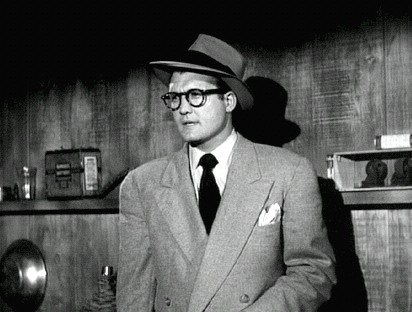
Reeves’ interpretation of Clark Kent is quite interesting. He did not portray the mild-mannered reporter as a complete klutz and coward. He made Kent just as likable and respectable as Superman. That may have made the flimsy disguise of a pair of glasses and a less forceful manner a pretty risky way to maintain a secret identity, but it probably helped Reeves maintain his own interest playing the character and maintained the audience’s interest between bursts of Superman action. 

It must also be noted that Clark Kent’s previous portrayals in radio and the movie serials were never as wimpy as the comics sometimes had him behave. Since Robert Maxwell had produced the radio program, co-wrote the Superman and the Mole-Men script, and would soon produce the first season of the Adventures of Superman television series, he may have been instrumental in making Clark Kent a character that does not lose the audience’s respect, as they must spend plenty of time with him before he saves the day as Superman. 

Reporter Lois Lane had always been pretty daring in her efforts to get a big scoop. Phyllis Coates’ portrayal of the character was independent, assertive, and could be quite dismissive of Clark Kent, despite his intelligence and integrity. Beneath all of Lois’ negativity was probably a sense of competitiveness and an unrealized resentment that her mild-mannered co-worker might be the Superman of her dreams who will not share his secret with her. 

Phyllis Coates has starred in plenty of B-films and serials and guest-starred on many television series, but, like her co-star George Reeves, she will always be most remembered for her role in Superman and the Mole-Men and the subsequent television series. Once the first season of the show was picked up for syndication and more seasons needed to be made, Coates was not available and was replaced by the Lois Lane of the movie serials, Noel Neill. 

The actors playing the first two mole-men that climb out of the oil well shaft, Billy Curtis and Jerry Maren, were two of the munchkins in The Wizard of Oz (1939). They are befriended by little Beverly Washburn, who would later play a member of the creepy Merrye family in the cult film Spider Baby (1964/released 1967).


Prolific character actor Jeff Corey plays lynch mob leader Luke Benson. Right after this film, the House Un-American Activities Committee lynched Corey’s career. Despite Corey having abandoned his interest in communism years earlier, he was not going to provide names of people for the committee to harass. While he was blacklisted as an actor for 12 years, Corey became a noted acting teacher. Fortunately, Corey resumed acting in the early ’60s appearing in many more films and became a familiar face on television guest-starring in a multitude of series. 

Nowadays, superhero films are a mainstay at the box office. Modern film production technology has made the special effects challenges of superheroes far easier to overcome. Hence, there has been a wave of overblown spectacles trying to push people out of their media cocoons at home to see something ideal for the big screen. Ultimately, this leads to apathy. When anything can be shown effectively and in excess, there is no longer an awe factor that will sustain audience involvement. There had better be some charm and humanity to make all of the razzle-dazzle matter. Those were the superpowers of George Reeves that really make Superman and the Mole-Men work.

TARANTULA (1955)

Director: Jack Arnold Writers: Robert M. Fresco, Martin Merkeley, Jack Arnold, adapting Robert M. Fresco’s “No Food for Thought” script us...