Showing posts with label Lyle Talbot. Show all posts

Wednesday, June 12, 2024

THE DRAGON MURDER CASE (1934)

Director: H. Bruce Humberstone

Writers: F. Hugh Herbert, Robert N. Lee, Rian James, based on the novel by S.S. Van Dine

Producer: unknown

Cast: Warren William, Margaret Lindsay, Lyle Talbot, Eugene Pallette, Robert McWade, George Meeker, Robert Barrat, Dorothy Tree, Helen Lowell, George E. Stone, William Davidson, Arthur Aylesworth, Etienne Girardot, Robert Warwick, Charles Wilson, (and uncredited cast) Henry Otho, Wilfred Lucas, Milton Kibbee, Sam McDaniel, Bruce Mitchell, Cliff Saum, Eric Wilton, Hedwiga Reicher, Eddie Schubert 

During a house party at the Stamm estate, the guests join Bernice Stamm (Margaret Lindsay) for an evening swim in the outdoor pool. After diving into the so-called “dragon pool,” Bernice’s fiancé, Monty Montague (George Meeker), never resurfaces. Old, dotty family matriarch Mrs. Stamm (Helen Lowell) blames the dragon of North American Indian legend that was supposed to inhabit the river which supplies water to the dammed-up portion making the Stamm’s swimming pool. Police Sgt. Heath (Eugene Pallette) brings District Attorney Markham (Robert McWade) along to answer the call from the Stamm estate. Wealthy intellectual and amateur detective Philo Vance (Warren William) tags along to assist in the investigation. Draining the pool does not reveal the missing Monty’s body, only a series of huge, three-toed tracks in the pool’s clay bottom. 

The Flashback Fanatic movie review 

Under the penname S.S. Van Dine, art critic Willard Huntington Wright wrote a series of a dozen mystery novels published from 1926 to 1939. These featured the erudite, amateur sleuth Philo Vance. While the novels were not critically acclaimed and their hero was often derided as a snob, Philo Vance proved to be very popular. Beginning at the end of the silent-film era in 1929, the Vance character was adapted for the movies. During the 1940s, Vance was the basis for three different radio programs. As late as 1974, an Italian television mini-series adapted the first three Philo Vance novels. 

1934’s The Dragon Murder Case was the sixth film in the series and based on the seventh Philo Vance novel. Many considered the novel to be inferior to those before it, and the film adaptation is not often well regarded. Perhaps many Vance film fans missed William Powell who had established himself in the role (which he did not care for) in four of the five previous films. None other than a pre-Sherlock Holmes Basil Rathbone had also played Vance in one film.

This morbid movie fan has always had a soft spot in his black heart for this Philo Vance flick. Although the mystery and its solution is not as complicated as some previous Vance films, I like the weird menace angle it teases us with. It is also rather unique in that half the movie is over with before the body of the murder victim can be located.

In The Dragon Murder Case, the very popular ’30s film actor Warren William plays Philo Vance the same year that he would become the first actor to portray writer Erle Stanley Gardner’s defense attorney hero Perry Mason. He would play Mason in four consecutive films. William would also star as a detective alongside Bette Davis in Satan Met a Lady (1936), the loose and comedic second adaptation of Dashiell Hammett’s novel The Maltese Falcon. William would return to the role of Vance in the mystery-comedy The Gracie Allen Murder Case (1939). From 1939 to 1943, William would star as The Lone Wolf in nine films of that detective character’s series. Horror buffs will remember William in the supporting role of Dr. Lloyd in 1941’s The Wolf Man.

While the Philo Vance of the novels could be rather off-putting in his snobbery, the Vance of the films seems a bit more appealing. That is probably not due particularly to any change of the character’s personality for the films, merely that the medium of the novels would spell out Vance’s attitudes in much more specific detail. Warren William’s relaxed confidence and refinement seems to be quite suited to the role.

Like many amateur detective heroes, Philo Vance is given plenty of autonomy by the authorities and can be pretty rash in his tactics. If anything had gone wrong during his reenactment of the Monty Montague disappearance, Vance could have been charged with manslaughter or, at least, reckless endangerment. I guess Vance’s already proven crime-solving genius earned him one helluva lot of trust with the authorities.

With dullards like Sgt. Heath around, rash action is welcome. Eugene Pallette portrayed the clueless cop five times, more than any single film actor would play Philo Vance. His character seemed pretty typical for its time. The guys actually on the payroll to solve crimes are usually outclassed in every way by the sleuths outside of the police department. This trope has held true from Sherlock Holmes to Batman. Despite Vance’s reputed snobbery, here he seems pretty tolerant of Sgt. Heath, even as he gently mocks Heath’s tendency to jump to conclusions.

As the featured ingénue that seems to be a major impetus in the plot, Margaret Lindsay does not have much to do. Like just about everyone here, her character of Bernice Stamm is just one piece in this crime-puzzle cast. Nevertheless, she manages to be pleasant and likable without ever getting too angsty about her less-than-ideal, impending marriage to Monty Montague. As a Warner Bros. contract player in the ’30s, Lindsay was kept mighty busy. Her favorite role would be alongside George Sanders and Vincent Price in Universal Pictures’ gothic-flavored The House of the Seven Gables (1940).

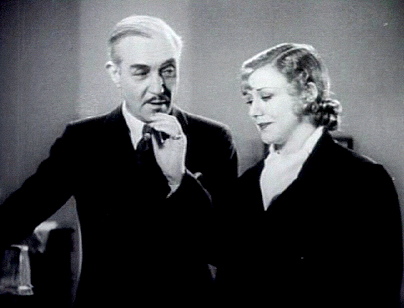
Third-billed Lyle Talbot’s Dale Leland is the lovesick guy that has an obvious motive for killing Monty Montague, the fiancé of his true love, Bernice. While he gets plenty of screen time, this seemingly passive role probably had Talbot relishing the times he was loaned out from First National Pictures/Warner Bros. to play the energetic leads in the low-budget crime thrillers The Thirteenth Guest (1932) and A Shriek in the Night (1933).

George Meeker is one of those guys that you inevitably run across in movies of the ’30s and ’40s. He was a very busy actor that wound up usually being cast as the unprincipled supporting character or an outright villain. Actually, his role here as the ill-fated Monty Montague seems a bit less unpleasant than usual, until we find out just how he managed to hook up with Bernice Stamm. Once we learn what his character is about, there is no love loss felt about his fate.

The Stamms really seemed to be begging for trouble when they drew up the guest list for their house party. They not only invite bride-to-be Bernice Stamm’s passed-over sweetheart, they also invite Ruby, an old flame of the ill-fated Monty. Dorothy Tree plays the sexy, blonde Ruby. This macabre movie junkie remembers her best as a vampire bride in both the Bela Lugosi-starring classic Dracula (1931) and the simultaneously produced Spanish version.

I suspect that a lot of the appeal to most of the depression-era audience for films like this was to vicariously experience the lavish comfort of the upper class that they envy, while they can also gloat over strife among the well-to-do and the nasty fates some of them suffer. (Works for me.) Having that ingenious snob Philo Vance crash the party to try solving this whodunit or whatdunit just for the hell of it makes me glad that I attended this sinister soiree called The Dragon Murder Case.

Thursday, April 11, 2024

THUNDER IN THE PINES (1948)

Director: Robert Edwards

Writers: Jo Pagano, Maurice Tombragel

Producer: William Stephens

Cast: George Reeves, Ralph Byrd, Lyle Talbot, Denise Darcel, Marion Martin (as Marian Martin), Greg McClure, Michael Whalen, Vince Barnett, Roscoe Ates, Tom Kennedy, (and uncredited cast) Frank Hagney, Milicent Patrick, Arno Tanney, Jack Tornek, Joey Ray 

Wartime buddies Jeff Collins (George Reeves) and ‘Boomer’ Benson (Ralph Byrd) are now northern Wisconsin lumberjack foremen. Each of them has been secretly corresponding with a girl that they met in France during the war. When French beauty Yvette Cheron (Denise Darcel) meets both men at the Osega town train station, Collins and Benson realize that they are both after the same woman. Shifty, local businessman Nick Roulade (Lyle Talbot) has recently hired Collins and Benson separately to harvest the pines on different halves of his land. The two logging pals have become competitors to deliver the timber from their assigned areas by an April 1st deadline. The winner of the competition will not only win a bonus; he will also win the hand of the flirtatious Yvette. 

The Flashback Fanatic movie review 

There are some movies that seem to have trouble fitting neatly into a genre. Those are often highfalutin dramas that usually deal with heavy issues, and an audience will only line up for them when household names take the starring roles. However, some oddball B-films never intended to be anything more than light entertainment while somehow avoiding common genre classifications. One would think that a modest production would need to push an obvious and exploitable genre to hook an audience needing a reliable fix from a certain kind of story. Moviegoers will not need big production values or major stars if there is an intriguing mystery to solve, a criminal gang to defeat, a monster to destroy, or an Old West town to clean up. One then has to wonder just what was the intent behind Thunder in the Pines. 

I was surprised to learn that there have been over forty films about lumberjacks. During the first half of the 20th century, this line of work must have been widespread enough to get the attention of filmmakers. Still, lumberjacks were hardly the basis for a thriving film genre. Western, horror, and crime pictures would have seemed to be much safer and easier fare for the low-budget filmmaker to market. 

Nevertheless, Robert L. Lippert’s Screen Guild Productions (soon to be renamed Lippert Pictures) must have decided that the off-the-beaten-path environment and situations of Northwoods logging would provide an interesting backdrop for some macho shenanigans. In those days there also seemed to be more of an interest for wilderness-based adventures. Lippert must have been pretty enthusiastic about Thunder in the Pines to go to the trouble of having it made with sepia-tone prints. 

The obscure Thunder in the Pines is chiefly remembered for starring George Reeves. Prior to this film, Reeves had a long string of roles in B-films and notable appearances in a few prestigious pictures. Early in his career, Reeves had the small role as one of the Tarleton twins in one of the most famous films of all time, Gone with the Wind (1939). Just before his military service, he starred in 1943’s Oscar-nominated, World War II drama So Proudly We Hail! After the wartime service interruption of his career, George Reeves was back to B-films. This was frustrating for Reeves because his acting career seemed to be a casualty of bad timing. When he made Thunder in the Pines, Reeves was just three years away from becoming famous as Clark Kent/Superman in Superman and the Mole-Men (1951), which led to the Adventures of Superman television series (1952-1958). Despite landing a small role in the Oscar-winning From Here to Eternity (1953), Reeves was typecast as the Man of Steel for the rest of his life. 

Reeves’ co-star, Ralph Byrd, was another B-film veteran that had already become famous for portraying a comic strip hero. Byrd had made many appearances in small and supporting roles in movies throughout the 1930s. His claim to fame was starring in film adaptations of Chester Gould’s detective newspaper strip, Dick Tracy. Beginning in 1937, Byrd starred as Tracy in four Republic Pictures serials, two RKO Radio Pictures feature films, and 48 episodes of the Dick Tracy ABC television series (1950-51). Byrd also starred in other serials including another adaptation of a hero from the comics. Columbia Pictures’ serial The Vigilante (1947) had Byrd playing the masked, motorcycle-riding, crime-fighting cowboy published by DC Comics. 

Producer William Stephens had already co-starred George Reeves and Ralph Byrd earlier the same year in Jungle Goddess (1948). There they also played two pals that wind up pitted against each other. That previous film was a pretty dull jungle flick that gave actors Reeves and Byrd just a bit more dramatic meat to gnaw on, but it did not allow them any of the rambunctious fun found here. For Thunder in the Pines, they play wartime chums that became peacetime lumberjacking partners goaded into competing against each other for love and money. Reeves and Byrd approach their roles with gung-ho enthusiasm that adds a lightly comedic edge to their mutual antagonism. 

Stephens’ unfulfilled intention was to keep these two actors as a team in a succession of pictures. With the previous film set in the African jungle, Thunder in the Pines located in the Northwoods, and a third movie planned to take place in South America, perhaps the intent at the time was to make the Reeves/Byrd duo the low-budget-adventure-film answer to the Bob Hope/Bing Crosby team in their “Road” pictures. Thunder in the Pines is certainly not intent on being as satirical and musical as the “Road” films, but it features plenty of light-hearted conflict set in an unusual locale. 

The draw for today’s movie buffs seeking out this film is seeing Superman vs. Dick Tracy. Since neither Reeves’ Jeff Collins nor Byrd’s ‘Boomer’ Benson have any super powers, it should be a fair fight. The story begins with these two pals slugging each other in a barroom. This maniacal, manly fun is only interrupted when they pause to ogle shapely, blonde Pearl (Marion Martin) strutting into the tavern. Then they make a note to one another to resume their brawl at a later date and have at their beers. Throughout this film, Collins and Benson are on the verge of pummeling each other at every opportunity. 


One may wonder where hardworking lumberjacks find the energy to waste clobbering each other for kicks in their down time, especially as we see plenty of tree-cutting action without a single chainsaw to be found. Well, that’s easy for Collins and Benson, since they are the logging ramrods just barking orders all day at their men who are doing all of the grunt work. 


In the small logging town of Osega, it seems that there is nothing to do but work, drink, and fight. All work and no play make lumberjacks punch drunk. One magical aspect of this little burg is that the few women who ever set foot in town are always knockouts that can break up the monotony of beer and brawling for our heroes. 

Marion Martin, as Pearl, is my favorite character in this thing. I suppose you are all probably thinking that just makes me a lech. Hardly. I’m a lech and a lush, so there! Martin was the sexy garnish to many cinematic concoctions throughout the ’30s and ’40s. Here in Thunder in the Pines, Martin gets some of the best lines and makes adlib mixology simple and dangerous. I guess if I were going to die of alcohol poisoning, it might go down easier if my bartender looked like Marion Martin. 


Pearl sashays into Osega, Wisconsin to hook up again with Nick Roulade, owner of the town’s tavern and large swaths of the surrounding woodland. B-movie stalwart Lyle Talbot plays Roulade. Talbot was a familiar face as an up-and-coming star during the ’30s at Warner Brothers, a very busy character actor in films of the ’40s and ’50s, and a prolific television performer. His Nick Roulade certainly qualifies as the heel in Thunder in the Pines. Not only does Roulade cheat at cards and try swindling the two lumberjacking partners he has pitted against each other, he slobbers all over the luscious Pearl that has come carrying a torch for him all the way from Chicago to be his barmaid. I can’t say I blame the guy, but then Nick Roulade immediately fixates on the very next nubile visitor to Osega. 

Once Yvette Cheron rolls into this little logging town, the greed and gonads get out of control. Yvette seems to enjoy wrapping every guy’s woody around her little finger. She knowingly encourages Jeff Collins and ‘Boomer’ Benson to compete for her. However, she is all too aware of the interest Nick Roulade has also taken in her. Yup, she’s a beautiful, bad influence. French actress Denise Darcel plays her without a sense of malice, but she sure can be fickle. Darcel first caught my eye as the voluptuous spitfire Lola in Tarzan and the Slave Girl (1950). 

Apparently, a town as small as Osega can only make room for visitors if they are gorgeous gals. Milicent Patrick plays the last of the only three women we ever meet in Osega. She’s the beautiful brunette in black that drops in at the film’s finale. Patrick was a model, a bit player in films, and had occasional guest roles in television series, but she made her greatest filmic impact as an artist. She had worked in animation for Walt Disney Productions. Later, Patrick would become involved in special effects makeup at Universal Studios and designed such famous movie monsters as the alien of It Came from Outer Space (1953) and the Gill-man of Creature from the Black Lagoon (1954). 

Thunder in the Pines succeeds almost entirely because of this interesting cast. It has the added eccentricities of our two heroes’ manic behavior and the unusual locale where they brawl and bicker. Since this is all tossed off with a light touch, it makes an amusing, offbeat oddity for B-film fans. So, button up your flannel shirts and pour yourself a cold one to get braced for this lumberjack lunacy. Timberrr!!!

This post was contributed to The 2nd Annual 'Favorite Stars in B Movies' Blogathon hosted at Films From Beyond the Time Barrier.

Sunday, August 27, 2023

A SHRIEK IN THE NIGHT (1933)

Director: Albert Ray

Writers: Kurt Kempler, Frances Hyland

Producer: M.H. Hoffman

Cast: Ginger Rogers, Lyle Talbot, Purnell Pratt, Harvey Clark, Lillian Harmer, Arthur Hoyt, Louise Beavers (as Louise Beaver), Clarence Wilson, (and uncredited cast members) Maurice Black, Jim Farley, Cyril Ring, Tiny Sandford, Philip Sleeman, Dick Rush 

In the middle of the night at the towering Harker Apartments Building in New York City, the millionaire owner Adam Harker falls screaming from his penthouse to his death. Newspaper reporter Pat Morgan (Ginger Rogers) has been posing as Harker’s live-in secretary to investigate his rumored ties to organized crime. Ted Rand (Lyle Talbot) is another reporter from a rival newspaper also trying to get a scoop on this case as he tries to woo Pat. Despite their competition, Pat and Ted cooperate trying to find the reason for Harker’s death as more bodies turn up in the Harker Apartments. 

The Flashback Fanatic movie review 

A Shriek in the Night is another of those little B-film thrillers from the 1930s that has plenty of humor, a tricky murder gimmick, and fine performances from the main players. It also has an atypical approach to its characters. The lead protagonists that are the most appealing and who get the most screen time are not as instrumental in solving the mystery as other seemingly minor characters. These developments are more of a surprise than the reveal of the villain. 

This film certainly begins with a bang, or actually with a shriek and a thud to be more precise. The brief opening credits have barely had time to finish before the first death via high dive off of the Harker Apartments Building occurs. This grim event is immediately dealt a bit of irreverence as one happily boozed-up bystander assumes that the fresh corpse of Harker is drunk. This is just the first hint of how this film will confound a lot of our expectations about crime thriller conventions. 

A tipsy crime scene gawker is only the first of many indications that the prohibition era was running out of steam. Booze was on the brain of a restless public anticipating the legalization of intoxicants. This is another early ’30s film in synch with that sentiment. Characters frequently indulge in drink and reference going to speakeasies. One shady character’s last name is Martini (Maurice Black). Even Police Inspector Russell (Purnell Pratt) savors the scent from a bottle of booze at a crime scene. This irreverence for the legal restrictions about alcohol seems to carry over into the narrative’s disregard for genre expectations and creates an overall sense of mischief. This flick even gives us more than one way for characters to get “gassed.” 

Ginger Rogers had already starred just the previous year in another Albert Ray-directed mystery thriller, The Thirteenth Guest (1932). Being just on the verge of superstardom in 1933, Rogers stars here as newspaper reporter Pat Morgan. All it takes is her beauty and relaxed charm to make us pay attention to her simple character in this odd, little yarn. Later that year, Rogers’ movie immortality really took off by appearing for the first time with Fred Astaire in Flying Down to Rio (1933).

Lyle Talbot had also co-starred with Ginger Rogers in that earlier Albert Ray film. At this time Talbot was in the midst of his six-year Warner Brothers contract and probably at the height of his fame. He was often cast in villain roles and, as Talbot wished to play good guys, he must have relished the opportunities getting loaned out to appear as the heroic lead in a couple of Albert Ray’s B-flicks. In later years he would have a long career as a character actor on film and television. Superhero fans know him best for being the first film actor to play Commissioner Gordon in the serial Batman and Robin (1949) and Superman’s archenemy Luthor in the serial Atom Man vs. Superman (1950). Cult film fans will remember Talbot’s appearances in three of famed bad movie director Ed Wood’s films: Glen or Glenda (1953), Jail Bait (1954), and Plan 9 from Outer Space (1957).

In A Shriek in the Night, Rogers and Talbot as our leads are the attractive couple we think are going to hook up, despite their playful antagonism. Since they are both newspaper reporters, we also expect them to solve the mystery. This film devotes plenty of attention to them, but there are other characters that actually prove to be just as instrumental in getting to the solution of this case. It can even be argued that the Rogers and Talbot characters of Pat Morgan and Ted Rand are not really solving the mystery but just spicing up the plot with some humor and romance. 

Another character that is a change of pace is Police Inspector Russell. Unlike many other such figures in crime thrillers featuring amateur sleuths, this official representative of law enforcement seems quite capable and likable. Russell doesn’t want reporters interfering with his investigation, but he is quite civil and intelligent. He even seems to take a genuine liking to Ginger Rogers’ Pat Morgan; the guy has great taste. Yet in spite of the respect this character is portrayed with, he is not picking up all of the crime-solving slack left by our romantic leads. 


Many horror and mystery films of this era had comic relief characters. There are several here, as well, such as the panicky maid Augusta (Lillian Harmer) and Inspector Russell's meek secretary Wilfred (Arthur Hoyt). However, some of them are absolutely vital in dealing with this film’s mystery and menace. That is another quirk in this offbeat, little thriller that does not always meet expectations. It seems to suit the sense of mischief running throughout the story. 

Despite all of this disregard for typical genre character responsibilities, there are a few macabre touches that help to maintain the intrigue. Exactly how the victims are being killed is as puzzling as the killer’s identity. The murderer also indulges in a bit of mental sadism by sending a peculiar warning card to the intended victims. 

Director Albert Ray does not get too fanciful in his direction. He does not need to do much in a film with a short running time and the humor of the Rogers and Talbot performances to keep things moving. Ray does use the interesting trick a few times of having scenes become very dark as we lose sight of characters to keep us disoriented and in suspense. This has a nice payoff as A Shriek in the Night reaches its climax in the film’s most irreverent touch.

STANLEY (1972)

Director: William Grefé Writers: Gary Crutcher, William Grefé Producer: William Grefé Cast: Chris Robinson, Alex Rocco, Steve Alaimo, Ma...