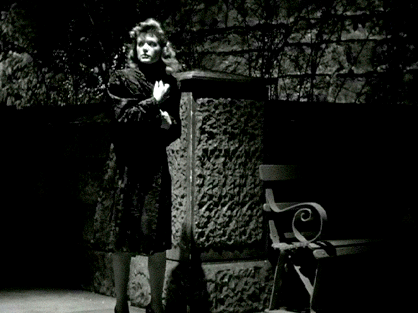
Director: Jacques Tourneur
Writer: Richard Matheson
Producers: James H. Nicholson, Samuel Z. Arkoff
Cast: Vincent Price, Peter Lorre, Boris Karloff, Basil Rathbone, Joyce Jameson, Rhubarb (the cat Cleopatra), Beverly Powers (as Beverly Hills), Linda Rogers, Joe E. Brown, Luree Holmes, Alan DeWitt, Buddy Mason, Douglas Williams, (and uncredited cast) Paul Barselou, Harvey Parry, Charles Soldani
In 19th century New England, underhanded undertakers Waldo Trumbull (Vincent Price) and Felix Gillie (Peter Lorre) are so destitute that they have used a single coffin for the last thirteen years. Once the mourners leave the graveside after each funeral service, Trumbull and Gillie dump the corpse into the hole and bury it to keep reusing the same casket. In spite of such economizing, their rent is a year overdue. Trumbull decides that they must resort to murder to generate more business.
The Flashback Fanatic movie review
During American International Pictures’ heyday of Edgar Allan Poe story adaptations, they followed up their Poe-inspired horror-comedy The Raven (1963) with The Comedy of Terrors. The latter film is not a Poe-based project and, surprisingly, not even contrived to be marketed as one. After all, AIP was the studio that tried passing off an adaptation of H.P. Lovecraft’s novel The Case of Charles Dexter Ward as a Poe adaptation by calling it The Haunted Palace (1963), merely using the title of one of Poe’s poems. Despite The Comedy of Terrors taking place in the Poe-appropriate setting of 19th century New England and dealing with that Poe-story peril of premature interment, AIP were content to just deliver another comedy dealing with period piece horror situations without a Poe reference. They probably thought that, between the gothic horrors of Britain’s Hammer Films and their own Poe adaptations, the popularity of classic horror was now firmly established and would contrast enough with humor for The Comedy of Terrors to create an interest all its own.

The Comedy of Terrors has the talent to make it an absolute joy for the classic horror fan. Genre film stalwarts Vincent Price, Peter Lorre, Boris Karloff, and Basil Rathbone are given the chance to play comedy to the hilt. It is clear that they are enjoying themselves bringing to life the morbid slapstick, crass behavior, and bumbling antics in Richard Matheson’s fun script.

Another surprise is that Roger Corman was not this film’s director. Corman had directed all of the previous Matheson-scripted Poe films. That team seemed to be a safe bet at the box office for AIP’s period piece horror films, including the recent horror-comedy The Raven. Matheson had suggested that Jacques Tourneur direct. Best known as the director for several of producer Val Lewton’s atmospheric and thoughtful horror classics of the 1940s, one of the greatest film noirs with Out of the Past (1947), and the intense British supernatural thriller Night of the Demon (1957), Tourneur may seem like an odd choice to direct a comedy, even if it has macabre aspects. Matheson had been impressed with Tourneur’s thorough preparation and efficiency when directing the Matheson-scripted episode “Night Call” of The Twilight Zone television series (1959-1964). Matheson’s instincts paid off. Tourneur’s direction must have agreed with the entire cast who give spirited performances that result in plenty of laughs.

Vincent Price is every bit as accomplished in his comedy here as he had been with the horror that is a large part of his cinematic reputation. He is hilariously despicable as the unprincipled, sarcastic, and ill-tempered drunkard Waldo Trumbull. My favorite aspect to this comedy is the oh-so-refined manner that Price’s Trumbull knowingly affects that contrasts with the true crassness of his character. One of the funniest line deliveries I have ever heard is when Price says, “Remove the carcass.”

As Felix Gillie, Waldo Trumbull’s oppressed and bumbling lackey, Peter Lorre has our sympathy while still earning laughs. Gillie’s lack of ability is apparent at all times. Whether trying to build a coffin, breaking into a house, or even correctly pronouncing Trumbull’s name, Gillie never manages to accomplish much more than irritating his employer. Trumbull keeps Gillie under his thumb because he knows of Gillie’s criminal past and thinks that Gillie has no choice but to remain as Trumbull’s unscrupulous, undertaking assistant.

Boris Karloff makes a seemingly thankless role as a doddering and ineffectual old man into another comedy highlight. As Amos Hinchley, he is the senior partner of the Hinchley & Trumbull Funeral Parlor. Being hard of hearing, tired, and senile, Hinchley is oblivious to the treachery of his partner. Trumbull’s favorite drunken game is trying to offer the old man “medicine” from a clearly labeled bottle of poison. When Hinchley’s daughter, Trumbull’s neglected wife Amaryllis, keeps preventing her father from being poisoned, Hinchley whines that nobody cares whether or not he lives or dies since he can’t take his “medicine.”

Making the despicable Waldo Trumbull even more unreasonable is his disdain for his voluptuous wife. The beautiful blonde Amaryllis tries to be faithful to her habitually drunk husband despite his insults and ill temper. Apparently, Amaryllis is stuck in this marriage to her father’s amoral business partner. It must be said that her ear-splittingly awful attempts at operatic singing would test anyone’s patience except her nearly deaf father and the love-struck Felix Gillie. As Amaryllis, Joyce Jameson adds to the silliness with her character’s total lack of self-awareness regarding her terrible singing voice and her ambition to be an opera singer.

It is interesting to consider that in the 1962 AIP film Tales of Terror, during the segment adapting Poe’s “The Black Cat,” the acting trio of Price, Lorre, and Jameson also played out the situation of the destitute inebriate not appreciating his luscious wife who is charmed by an associate. Price and Lorre are actually almost playing reversed roles in The Comedy of Terrors. Peter Lorre’s role in “The Black Cat” was that of the crude, drunken lout neglecting Joyce Jameson as his wife who falls for the refined and appreciative wine taster played by Vincent Price. Lorre and Price were in fine, if more subdued, comic form there, as well.

Another cast member from Tales of Terror is Basil Rathbone. Here his John F. Black is the landlord threatening Waldo Trumbull with eviction, which inspires the unsavory undertaker to commit murder to get paying customers in a hurry. Rathbone’s Black is a devotee of Shakespeare and indulges himself acting out with hammy excess scenes from the Bard’s plays. In Poe fashion, Black is afflicted with frequent deathlike spells from catalepsy that keep the audience and the shifty undertakers wondering if he is ever really going to die.

I can’t recall ever seeing a film where it was more evident that everyone involved must have been having a great time making it. The Comedy of Terrors is a farce that should also give every fan of classic horror a great time watching it.