Showing posts with label Tom Atkins. Show all posts

Sunday, March 8, 2026

THE DETECTIVE (1968)

Director: Gordon Douglas

Writers: Abby Mann adapting Roderick Thorp’s 1966 novel

Producer: Aaron Rosenberg

Cast: Frank Sinatra, Lee Remick, Ralph Meeker, William Windom, Jacqueline Bisset, Jack Klugman, Tony Musante, Robert Duvall, Al Freeman, Jr., Lloyd Bochner, Tom Atkins, Horace McMahon, Pat Henry, Patrick McVey, Dixie Marquis, Renée Taylor, James Inman, Sugar Ray Robinson, George Plimpton, Bette Midler (uncredited), Joe Santos (uncredited)

New York City police detective Sgt. Joe Leland (Frank Sinatra) is investigating the murder and mutilation of Teddy Leikman (James Inman). Since the victim was the son of a politically influential local businessman, the case attracts a lot of attention. Leland is prodded by his captain (Horace McMahon) and the media to solve the case quickly. Leland’s life becomes endangered as his investigation threatens to expose more than just the murderer.

The Flashback Fanatic movie review

The Detective is the first flick this film junkie had seen starring Frank Sinatra. His performance really made me appreciate that he was more than just that famous singer for an older generation. Sinatra’s assured acting style really earned my respect. As a result, Ol’ Blue Eyes was finally on my radar, and I began to take notice of some of those standards of his that are the perfect musical complement to my martinis. One vice leads to another and another…

The Detective was a far cry from the Rat Pack-attitude-flaunting flicks that Frank Sinatra often starred in during the 1960s. This crime drama may be buoyed by the Sinatra presence but is anchored in plenty of heavy themes: individual and civic integrity; homosexuality; law enforcement prejudice, corruption and fascism; class division; and psychological issues causing relationship dysfunction.

In contrast to his free-and-easy mystery romps as Florida-based private eye Tony Rome (1967’s Tony Rome and 1968’s Lady in Cement), Frank Sinatra investigates Big Apple crime in this rather downbeat police procedural. The role of the tough, principled detective Joe Leland suits Sinatra’s chutzpah perfectly. Leland’s ethics and idealism are constantly offended by his coworkers and society. He even chastises himself at one point when he feels that he sought an easy solution to a case that enabled his promotion.

Lee Remick stars opposite Sinatra as his love interest, Karen Wagner. It is almost immediately established that Joe Leland and Karen Wagner are two people with very different backgrounds and temperaments. Despite their commitment to each other, their relationship is complicated by Karen’s ongoing psychological issues. Sinatra’s frequent director in the ’60s, Gordon Douglas, often shoots closeups of Sinatra and Remick looking directly into the camera as their characters are having intimate conversations with each other. One would think that this indicates a bond of direct honesty between this couple apart from the sordid world that Detective Leland deals with. However, these closeups often create a sense of confrontational uneasiness as we are not sure these two characters are truly compatible.


There are many other familiar faces cast as Sinatra’s fellow detectives. Jack Klugman plays Leland’s friend Dave Schoenstein. Ralph Meeker and Robert Duvall are absolutely thuggish as Curran and Nestor. Alan Freeman, Jr., as Leland’s new, young partner, Robbie Loughlin, provides a surprise that makes Leland confront his own ambition.


Tony Musante has a featured role as murder suspect Felix Tesla. He is one pathetic knot of psychotic misery.

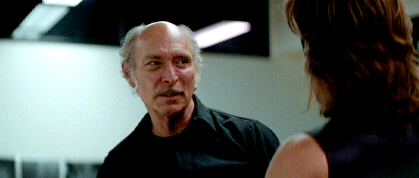
In his very first film role, Tom Atkins plays the trigger-happy, young cop being grilled by Leland. Atkins would become a horror film favorite in the 1980s for his work in such films as The Fog (1980), Creepshow (1982), Halloween III: Season of the Witch (1982), and Night of the Creeps (1986).

Jacqueline Bisset plays one of three important roles that don’t matter until over halfway through the film. Her Norma MacIver approaches Leland to investigate the apparent suicide of her husband. She also provides another potential love interest for Joe Leland.

Lloyd Bochner was a frequent guest-star on many ’60s and ’70s television series and appeared with Sinatra in the previous year’s Tony Rome film. Bochner provides his typically smooth and shifty presence as psychiatrist Dr. Roberts.

The character of Colin MacIver, Norma’s late husband, is played by William Windom, who appears only in a lengthy flashback. The ubiquitous Windom began performing on television in 1949 and never stopped. He also acted in an enormous number of movie and theater productions. Windom may be best known for his television roles as the unfortunate Commodore Matt Decker in the original Star Trek series (1966–69) episode “The Doomsday Machine” and for his recurring role as Dr. Seth Hazlitt on Murder, She Wrote (1984–96).

The Detective could have been an enormously significant movie in action film history. While it is more of a crime drama than an action thriller, it was probably Sinatra’s portrayal of a tough, idealistic police detective that resulted in him being offered the title role of that 1971 classic Dirty Harry. Of course, Sinatra passed on it, and Clint Eastwood became cinema’s most famous cop. Since The Detective film was based on Roderick Thorp’s novel, when his 1979 sequel novel, Nothing Lasts Forever, was adapted as the 1988 film Die Hard, Sinatra was offered the starring role. Again, Sinatra passed on a role that led to another hit action film series. The Joe Leland character was changed from a retired police detective to a younger, still-working police detective named John McClane played by Bruce Willis.

The Detective was released just months before the Motion Picture Association of America rating system began. It is a clear indication of the medium’s new direction using edgier, adult content reflecting the increasing turbulence of the times and questioning the merit in society’s classes and institutions. All the sordid compromises and resulting complications in an unethical society make the story’s murder and its solution seem to be almost beside the point. In this messy and compromised world, Sinatra’s Joe Leland weathers disappointments and eventually must change his tactics to keep making a difference. This film does not offer a tidy and triumphant climax but tells us that the good fight must continue to be waged and that ethics still matter.

Friday, December 6, 2024

ESCAPE FROM NEW YORK (1981)


Director:
John Carpenter

Writers: John Carpenter, Nick Castle

Producers: Larry Franco, Debra Hill

Cast: Kurt Russell, Lee Van Cleef, Donald Pleasence, Adrienne Barbeau, Harry Dean Stanton, Ernest Borgnine, Isaac Hayes, Tom Atkins, Charles Cyphers, John Diehl, Season Hubley, Arden Young, Frank Doubleday, Ox Baker, Buck Flower, Jamie Lee Curtis (uncredited narrator and automated voice), Joe Unger (in deleted scene) 

By 1997 the entire island of Manhattan has been sealed off and used as the dumping ground for all of the criminals in the United States of America. Once exiled in the neglected metropolis, the convicts are left to fend for themselves and are never released. When terrorists crash land the Air Force One jet in New York City, the leader of the prison city’s gangs, the Duke of New York (Isaac Hayes), takes the U.S. president (Donald Pleasence) hostage. Liberty Island Security sends a recent convict, decorated former Special Forces veteran Snake Plissken (Kurt Russell), on a rescue mission into New York City. If Plissken succeeds bringing out the president and an important audiocassette tape that he was carrying to a peace conference, Plissken will receive a full pardon. If Plissken fails to accomplish his mission in 24 hours, two explosive capsules injected into his neck will kill him. 

The Flashback Fanatic movie review 

During the 1970s, director John Carpenter had helmed several well-received television movies and a couple of cult films before he made one of the most famous horror films ever with 1978’s Halloween. Although that horrific holiday favorite would become his calling card, Carpenter would continue regularly making many more feature films of various genres for the rest of the century. After Halloween, Carpenter’s Escape from New York is probably his most successful film that also has continued to be a venerable cult favorite. He has made other cult films with reputations that have grown over the years, despite lackluster profits or indifferent critical responses at the time of their release. But it seems that Carpenter hit the sweet spot for genre filmmaking with Escape from New York; it was original, offbeat, and immediately profitable. Fans loved it then and revere it now. 

The post-apocalyptic and dystopian sci-fi film was becoming a popular genre in the 1980s. The no-holds-barred action and destruction of social norms provided the edgy thrills that tantalized the audience. Escape from New York lands neatly into that genre and was also an influence on it. 

The world of this film is not explored in any great detail. We only know that the United States is at war and the crime rate has increased enormously, which would seem to indicate that the government is not addressing the needs of the people and civilization. All that we see depicted in this future world is a militarized prison system and the prison island of Manhattan. This drastic measure of dealing with crime by offering convicts the choice of death or being abandoned for the rest of their lives in the lawless ruins of New York City is an indication of the fascism used as a last resort to maintain order. It is never mentioned what conditions and federal failures have led to this bleak state. 

One of the most intriguing aspects of this film is seeing how people behave when they are trapped in a society without rules. These convicts are left to their own devices in the neglected ruins of what was once one of the world’s grandest cities. When these criminal exiles are not preying upon each other, they indulge in entertainments that have devolved to the norms of previous centuries. A dilapidated theater has an all-male cast in drag (as in times before women were allowed to appear on the stage) dreadfully performing a musical and an old boxing ring is used for a gladiatorial combat to the death. 


What everyone remembers about this film is Snake Plissken. The fact that our criminal anti-hero is a decorated veteran of the U.S. military drives home this film’s cynical tone. Plissken is apparently as disillusioned as John Carpenter and many others were with the country after the Vietnam War and Watergate. I do not believe that Carpenter and his character Snake Plissken are making a specific political statement. Plissken never shares any feelings or philosophies; he just reacts and resents authority of any kind. 

Kurt Russell was a frequent child guest actor on many television series of the 1960s and was a popular star in pictures for Walt Disney Productions during his ten-year contract. Although he had an established career since a young age playing wholesome characters, Russell was cast against type in some made-for-television movies, such as The Deadly Tower (1975) and John Carpenter’s bio-film Elvis (1979). 

His role of Snake Plissken made everyone forget about the youth phase of Kurt Russell’s career. The timing was perfect; at age thirty Russell became a one-eyed, anti-authoritarian, ass-kicking icon. Plissken’s dialogue is terse and direct. He does not make wisecracks but still generates laughs with the disarming and confrontational nature of his comments. Best of all, Snake Plissken does not show off. His actions are as direct as his words. That is what keeps this film from falling into action movie absurdity. 

Lee Van Cleef is terrific as Police Commissioner Bob Hauk, the chief of the Liberty Island Security Control facility that admits convicts to be exiled into New York City. Van Cleef has a great presence and I could watch him verbally sparring with Russell’s Plissken for the entire film. Hauk is just as direct and unsentimental as Plissken. He is also quite ruthless in how he enlists Plissken’s cooperation.


This cast is loaded with other great names like Ernest Borgnine, Donald Pleasence, Adrienne Barbeau, Harry Dean Stanton, and Isaac Hayes. Players from other John Carpenter films, such as Tom Atkins, Charles Cyphers, Nancy Stephens, and Buck Flower, are featured in small roles. None other than Jamie Lee Curtis supplies narration to open the film and is also the automated voice at the Liberty Island prisoner admittance facility. 

While Escape from New York never preaches or teaches any lessons, it has an absolutely cynical attitude towards fascistic authority. One may try to discern a political leaning in the film, but that is probably a futile endeavor. Its only message seems to be disdain for those that would want to rule over a dysfunctional world.

STANLEY (1972)

Director: William Grefé Writers: Gary Crutcher, William Grefé Producer: William Grefé Cast: Chris Robinson, Alex Rocco, Steve Alaimo, Ma...