Showing posts with label Fay Wray. Show all posts

Friday, June 13, 2025

THE VAMPIRE BAT (1933)

Director: Frank R. Strayer

Writer: Edward T. Lowe

Producer: Phil Goldstone

Cast: Lionel Atwill, Fay Wray, Melvyn Douglas, Dwight Frye, Maude Eburne, Robert Frazer, George E. Stone, Lionel Belmore, Rita Carlisle, Stella Adams, William V. Mong, Paul Weigel, Harrison Greene, William Humphrey, Fern Emmett, Carl Stockdale, Paul Panzer, D’Arcy Corrigan

In the German town of Kleinschloss, a series of murders are leaving victims drained of blood. Police Inspector Karl Brettschnieder (Melvyn Douglas) is baffled. He believes the assailant is human, while most of the villagers attribute the killings to a vampire. Village physician Dr. Otto von Neimann (Lionel Atwill) is also seriously suggesting that Brettschneider consider the possibility of a vampire in their midst.

The Flashback Fanatic movie review

This film is a peculiar little mix of horror movie influences that creates something quirky and unique. While using leftover sets on the Universal Pictures lot just as that studio was setting the standards for movie horror in the new talkies era, The Vampire Bat goes its own strange way. It also stars the trio that appeared in some of the best horror films of the 1930s: Lionel Atwill, Dwight Frye, and Fay Wray.

The Germanic setting may have been dictated by the availability of some of the Frankenstein (1931) sets that were being used by this independent production. It also puts us right back into the European locale audiences were conditioned to accept as a hotbed for the supernatural because of classic novels and their movie adaptations. The atmosphere is certainly enhanced by those cobble stone streets and old street lamps. The preponderance of bats hanging around town adds to the creepy ambience.

Another ’30s horror film ingredient is the unforgettable Dwight Frye as the dim-witted Herman. Due to his crazed and unsavory 1931 roles in Dracula and Frankenstein, Frye is immediately looked upon with suspicion by the audience as well as the villagers. His habits of taunting the villagers in a threatening manner while laughing fiendishly and playing with bats do not enhance his Gemütlichkeit.

Supernatural considerations conflicting with rational, modern thinking were themes also dealt with in Dracula. This film has a Van Helsing-like character in Dr. Otto von Niemann as the scholar that is quite learned on the history of vampirism. He confounds the skepticism of the inspector trying to solve the crimes.

The Vampire Bat presents us with elements that were already on the verge of becoming clichés in horror films, yet these are often used to misdirect or lead to unexpected conclusions: the ever-present superstitions of the town folk, the town misfit acting alternately sinister and harmlessly befuddled, the mob of torch wielding villagers chasing down their suspect, the scientist trying to validate the supernatural, and a black-garbed fiend creeping across rooftops and invading homes to leave behind bloodless corpses.

Melvyn Douglas, as Inspector Karl Brettschneider, is refreshingly capable as the hero and romantic lead. That is quite a departure from the Universal Pictures template that this film wants the audience to think it is emulating. Brettschneider is both good-humored and dedicated. He is also frustrated at the ongoing series of killings that he seems helpless to prevent in his duties as a police inspector. This makes him instrumental in the story’s conclusion. He is not the helpless bystander that David Manners had to play so often in his Universal-horror-film-leading roles.

As Karl’s girlfriend, Ruth Bertin, the lovely Fay Wray is as adorable as ever and adds a bit of levity and romance to the proceedings. Amazingly, one of horror’s most iconic scream queens never gives her lungs a workout in The Vampire Bat.

Many critics bemoan the inclusion of comedy relief in old-time horror movies. There is plenty of it here in the character of Ruth’s Aunt Gussie Schappman (Maude Eburne). Her comedy is usually on the mark as she is interacting and conflicting with the main characters in amusing ways. Her interaction with Herman is funny and makes him seem quite sympathetic. That sympathy pays off later.

There is another ’30s horror angle that figures into the menace when fully revealed in The Vampire Bat. It demonstrates a bit of megalomania that is the most monstrous thing about the story. We see that an ambition is being pursued at a terrible cost for a goal that, as shown, seems of questionable value. I find this to be the most odd and satisfying aspect of this film. It is truly evil.

A telepathy gimmick is used in a unique and deadly manner, but it is never explained. Frankly, that is a bit lazy on the part of the writer, though I do like its use in the story. Some of the details concerning the blood draining of the victims are also rather vague. Midway through the film we see that process explicitly, but it raises questions as to how and why other victims are found dead in their homes. Did all the victims get dealt with in such an impractical manner?

Overall, The Vampire Bat is great antique horror fun. It has plenty of atmosphere and lots of traditional “horror stuff” that teases the audience before revealing the full truth behind the menace. Star Lionel Atwill, who became a horror film regular during the ’30s and ’40s, has never been better. Fay Wray’s beauty and charm are always welcome. Most importantly, Dwight Frye demonstrates that one’s pets should be adopted from an animal shelter or a reputable breeder. A pet bat may be cheap and conveniently fit in your pocket, but your reputation is bound to suffer.

Sunday, November 19, 2023

THE MOST DANGEROUS GAME (1932), aka THE HOUNDS OF ZAROFF

Directors: Ernest B. Schoedsack, Irving Pichel

Writers: James Ashmore Creelman adapting Richard Connell’s 1924 short story

Producers: Merian C. Cooper, Ernest B. Schoedack

Cast: Joel McCrea, Leslie Banks, Fay Wray, Robert Armstrong, Noble Johnson, Steve Clemente (as Steve Clemento), William B. Davidson, Dutch Hendrian, (and uncredited cast) Phil Tead, Hale Hamilton, Arnold Gray, James Flavin, Landers Stevens, Wesley Hopper 

When a yacht crashes into a reef and sinks just off the South American coast, its lone survivor, Bob Rainsford (Joel McCrea), is washed ashore on a small jungle island. He makes his way inland to the castle of Count Zaroff (Leslie Banks). The Russian Count is an avid hunter and recognizes Rainsford as an author and hunting authority. The Count has two other guests who are also recent shipwreck survivors, siblings Eve and Martin Trowbridge (Fay Wray and Robert Armstrong). The cordial Count soon reveals that the lighted buoys around his island meant to guide ships past the reefs are moved to cause the vessels to crash and sink. Zaroff uses any surviving castaways on his island as human prey to provide a greater challenge for his hunting mania. 

The Flashback Fanatic movie review 

While the filmmaking dynamic duo of Merian C. Cooper and Ernest B. Schoedsack were working on their elaborate and special effects-filled epic King Kong (1933) at RKO Radio Pictures, they decided to multi-task. They adapted the O. Henry Award-winning Richard Connell short story, “The Most Dangerous Game,” to be shot during pauses in King Kong’s lengthy production. They would utilize King Kong’s jungle sets and have four of its cast (Fay Wray, Robert Armstrong, Noble Johnson, and Steve Clemente) play roles in The Most Dangerous Game film during breaks in the King Kong shooting schedule. 

While this all seems like it might be biting off even more than King Kong could chew, Cooper and Schoedsack succeeded in simultaneously making two classic movies of pre-Code horror. Of course, King Kong is an innovative, effects-driven extravaganza with one of the most famous movie monsters of all time, while The Most Dangerous Game is an intense and compact thriller with one of the most memorable fiends in cinema history. 

The Most Dangerous Game film incorporates most of the details from Richard Connell’s short story and elaborates upon them. Most of the changes involve even more action, which also help to add a bit to the movie’s running time that still just barely steps over the hour mark. This is a film that doesn’t have a bit of waste. The only recess from danger is there to set the remote, exotic scene and establish the twisted motive that results in murderous sport. 

Another addition to Connell’s story for the film is a beautiful woman. As Robert Armstrong’s character of Carl Denham stated in King Kong, “The public, bless ‘em, must have a pretty face to look at.” We can’t complain when filmmaker Denham finds Ann Darrow to provide that pretty face for his film. Here in The Most Dangerous Game, we can’t complain when we get that same beauty provided by ’30s scream queen Fay Wray. However, Wray’s Eve Trowbridge is not just a romance plot device. Things are so frantic that there is not even time for Eve and Bob Rainsford to make goo-goo eyes at each other. She is there to act as a psychosexual kink in Count Zaroff’s hunting ritual. Zaroff intends to celebrate by using Eve as his prize once he succeeds in hunting down and killing Rainsford. Just as Zaroff needed to avoid boredom by choosing man as a more challenging prey to hunt, he also needs to refine his ritualistic pleasure even further with the reward of rape. 

Another pre-Code atrocity distinguishes The Most Dangerous Game. The film version makes explicit a grisly spectacle that is just hinted at by a single sentence in Connell’s short story. Once we enter Zaroff’s trophy room, there is no doubt that the Count is an obsessed madman. We know at that point that there is no reasoning with Zaroff. He makes the rules and will compel his guests to play. 

As Count Zaroff, Leslie Banks is one of my favorite villains. We immediately know from his eccentric manner, his weird castle in the jungle, and his intimidating servants that his hospitality may not be so comfortable. My favorite scene is Zaroff socializing with his guests as he is leading up to the subject of his “new sensation.” It is a wonderful tease of the horror to come. Banks is such a consummate fiend in this film that it is surprising he did not wind up typecast as only villains for the rest of his career. Just two years later, he would star as the hero of Alfred Hitchcock’s The Man Who Knew Too Much (1934). 
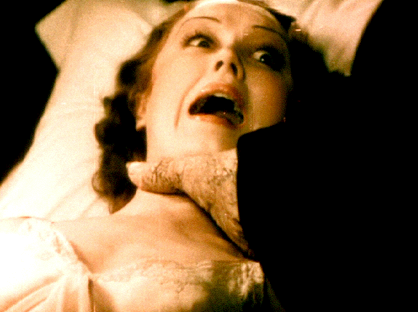
Bob Rainsford is an early starring role for Joel McCrea. Initially, the young man seems almost naïve, yet this is probably due to Rainsford not having the manner we expect of most action film heroes. McCrea’s Rainsford is free of swagger and cynicism, yet his experience as a hunter means he will be a worthy adversary for the bloodthirsty Count Zaroff. It is also much more satisfying to see the good-natured Rainsford’s change of attitude late in the film. 

The decade’s most famous damsel in distress, Fay Wray, was in the midst of her five back-to-back panic attacks. Although she had a very long filmography, she is certainly most revered by horror buffs for the run of fright flicks she starred in from 1932 to 1933. Without a doubt, her King Kong role of Ann Darrow assured her film immortality, but her other four horror films are also great fun. Her beauty and charm can’t help but enhance everything she appears in. As Eve Trowbridge, she gives our hero Bob Rainsford even more motivation to try beating Count Zaroff at his own game. 

Fay Wray’s King Kong co-star Robert Armstrong really slays me as Martin Trowbridge. As Eve’s boozin’ brother, he is too blind drunk to see the hints of danger that his sober sister tries to warn Rainsford about. Since Martin is perpetually pickled, perhaps Zaroff’s plans for him are appropriate. 

If anyone that looks like Noble Johnson answers the door, you know you’ve got the wrong address. He played the Chief of the natives on Skull Island in King Kong. Here he’s also up to no good on Count Zaroff’s island as his mute, torture-happy henchman Ivan. 

Yet another Skull Island native is also moonlighting as Zaroff’s hired help. Steve Clemente was the Witch King in King Kong. He’s in cahoots with Noble Johnson here, as well. As Zaroff’s servant Tartar, knife-throwing specialist Clemente makes things just as dangerous inside Zaroff’s castle as out in the jungle. 

While King Kong is rightly lauded for its innovations in special effects, some of those techniques are also employed in this film to create the eerie and dangerous environment on Count Zaroff’s island. Even before the hunt is on, there is an ominous aura established in the jungle as we first view Zaroff’s castle. A lot of ingenuity is employed to turn the RKO sets into a deep and nightmarish jungle world. 

Max Steiner’s film score for King Kong was far more extensive than in most early talkies and prompted the industry to make music a more integral element in film production. Since Steiner also provided The Most Dangerous Game with a lengthy and effective score, I think it can be considered just as filmically innovative. This music was used in a film being made at the same time as King Kong, but was released one year earlier. 


This was the movie that introduced the man-hunting-man routine, which has been explored in many films since but never topped. With its perverse and psychotic villain, exotic and remote setting, efficient storytelling, and escalating danger, The Most Dangerous Game is worth tracking down.

Sunday, August 22, 2021

MYSTERY OF THE WAX MUSEUM (1933)

Director: Michael Curtiz

Writers: Don Mullaly, Carl Erickson, Charles S. Belden (original story)

Producers (uncredited): Henry Blanke, Hal B. Wallis

Cast: Glenda Farrell, Lionel Atwill, Fay Wray, Frank McHugh, Edwin Maxwell, Allen Vincent, Gavin Gordon, Arthur Edmund Carewe, Holmes Herbert, Claude King, Thomas E. Jackson, DeWitt Jennings, Matthew Betz, Monica Bannister 

In 1921 London, sculptor Ivan Igor’s (Lionel Atwill) waxworks museum is set on fire for the insurance money by his unscrupulous business partner Joe Worth (Edwin Maxwell). The two men fight amid the blaze, and Igor is left unconscious as the museum burns down. Twelve years later, Igor is opening a new wax museum in New York City. Due to injuries suffered in the fire that destroyed his London museum, Igor is crippled and can no longer sculpt, but he instructs other artists to do the work of recreating his exhibits. Meanwhile, newspaper reporter Florence Dempsey (Glenda Farrell) is investigating the suicide of a beautiful model (Monica Bannister) and learns that the woman’s body has disappeared from the morgue. She soon notices that the Joan of Arc wax figure in Igor’s museum bears a striking resemblance to the missing suicide victim. 

The Flashback Fanatic movie review

Mystery of the Wax Museum is director Michael Curtiz’s horror follow-up to his Doctor X (1932). It inherits many of that earlier film’s advantages, while benefiting from a more logical plot. Once again, it stars Lionel Atwill and Fay Wray, it is filmed using the innovative two-strip Technicolor process, it touches upon some pre-Code subjects that would soon be glossed over or removed from later Hollywood films, and its depression era, big city setting provides grit and energy to the proceedings.


The film even shares set pieces with the earlier Doctor X. There is another morgue scene dealt with in more sinister fashion, another shocking reveal of the movie’s menace, a strange, vast set where we learn of the villain’s weird motives, and the final battle while trying to save the damsel in distress. 


This film’s greatest attribute is Glenda Farrell. As brassy, beautiful, blonde newspaper reporter Florence Dempsey, she provides the mile-a-minute banter and the perseverance to dig out the story that leads us to the revelations behind this movie’s menace. She also provides plenty of caustic contrast to the innocence of her lovely roommate, Charlotte Duncan (Fay Wray). Despite her hard-boiled front, Farrell’s Florence Dempsey manages to be a very appealing character. Farrell would go on to star again as a feisty newswoman in the '30s Torchy Blane film series. Superman’s co-creator and writer, Jerry Siegel, was inspired by Farrell’s performances when he added reporter Lois Lane to his hero’s supporting cast of characters. 


The edgier topics touched upon by this pre-Code film are Dempsey’s potential love interest having a history of living with a woman out of wedlock and buying prohibition era bootleg booze, another character being a drug addict and the cops waiting for his withdrawal pains to make him spill some information, Dempsey snatching up a few bottles of bootleg booze right under the noses of the police and telling them that they’ll also take some for themselves, and Dempsey’s greeting to a cop reading a Naughty Stories pulp magazine, “How’s your sex life?” All of these bits ground the film in an earthy, urban environment that humanizes the characters and reminds us that this bizarre mystery is happening in a real world. 


Overall, the film’s construction is more measured and its characters more engaging than the earlier Doctor X. While both films have their very satisfying horror highlights, striking sets, and thrilling climaxes, Mystery of the Wax Museum is a bit more polished and rational as a whole. Both films are fine examples of horror in the early talkies era, and it is a shame that director Curtiz only returned to the genre once more with The Walking Dead (1936). 

When the film was remade as House of Wax (1953), it featured another contemporary cinema innovation/gimmick by being shot in full color 3-D. Like Lionel Atwill in the earlier version, House of Wax star Vincent Price would soon become a horror movie mainstay. 

Both versions are great fun, but I tend to lean toward the original. It seems just a bit more subversive and crackles with that hard-bitten, depression era energy radiating from Glenda Farrell that can always inspire a bit of hope in hard times.

Thursday, August 19, 2021

DOCTOR X (1932)

Director: Michael Curtiz

Writers: Robert Tasker, Earl Baldwin, George Rosener (uncredited), based on the 1931 play The Terror by Howard W. Comstock and Allen C. Miller

Producers: Hal B. Wallis (uncredited), Darryl F. Zanuck (uncredited)

Cast: Lee Tracy, Lionel Atwill, Fay Wray, Preston Foster, John Wray, Harry Beresford, Arthur Edmund Carewe, George Rosener, Leila Bennett, Robert Warwick, Willard Robertson, Thomas E. Jackson, Mae Busch, Harry Holman, Tom Dugan 

New York City newspaper reporter Lee Taylor (Lee Tracy) is investigating a series of grisly murders that are being committed during nights of the full moon. He discovers that the police have called in Dr. Jerry Xavier (Lionel Atwill), the director of the local surgical research academy, to examine the body of the latest victim. Dr. Xavier concludes that the latest victim, like the others, was strangled, cannibalized, and had a wound to the brain inflicted with a scalpel. Since the scalpel that was used is of a special type only available locally at Xavier’s academy, police conclude that someone at the institute must be the murderer. To avoid bad publicity for his academy, Dr. Xavier makes a deal with the police to conduct an experiment to expose the killer.

The Flashback Fanatic movie review

Warner Brothers/First National’s Doctor X is a remarkable, and sometimes outrageous, pre-Code horror film that distinguishes itself from its competition and manages to be lively, moody, and entertaining. It boasts a fantastic and fiendish climax that really hits that horror sweet spot. It should be as well remembered as the early talkie classics Dracula (1931) and Frankenstein (1931) from Universal Pictures.

Doctor X is one of the early two-strip Technicolor process films. The surreal color palette created by the limitations of that motion picture innovation lends a weird atmosphere to this feature. This technical gimmick is almost all the movie seems to be remembered for by many. This is quite unfair as Doctor X was a unique horror film, and it dealt with some edgy material that the Motion Picture Production Code would ban in film production a few years later. 

None other than Michael Curtiz directed Doctor X. Yup, the guy that made Casablanca (1942); maybe you’ve heard of it. Curtiz lavishes lots of weird angles, creepy shadows, and stark lighting upon the sets and cast. One year later, Curtiz would direct the lively and contemporary urban fright flick, Mystery of the Wax Museum (1933). His third Warner Brothers horror film The Walking Dead (1936) starred the great Boris Karloff. 


Speaking of stars, Doctor X boasts the debut horror film performances of two talents that would appear in some of the best of the genre in the '30s. Appropriately, soon-to-be scream queen Fay Wray’s first line is her trademark scream at soon-to-be horror movie reliable Lionel Atwill. Wray and Atwill would also go on to co-star in Mystery of the Wax Museum and The Vampire Bat (1933). Fay Wray achieved immortality as Ann Darrow, the beauty in the beast’s paw in King Kong (1933). Atwill would go on to play everything from mad scientists to red herrings in many more horror and mystery movies. He even starred as the evil mastermind Professor Moriarty opposite Basil Rathbone’s Sherlock Holmes in Sherlock Holmes and the Secret Weapon (1942). 

In the film’s very first scene, Doctor X establishes an eerie urban atmosphere. The foggy, nighttime, waterfront locale, with a morgue and a brothel on the same street, creates a hard-bitten environment that is mourned by the moans of ship horns. While newspaper reporter Lee Taylor’s scaredy-cat antics are meant to be the comedy relief so endemic to this film era, it also underscores the creepiness of the situation. 


What is most striking about this early scene is the casual mingling of our reporter hero Taylor in the whorehouse that he enters to make a call to his office. He is allowed the use of the phone without being a paying customer and sneaks some appreciative glances at a couple of the gals, then heads back outside to go about his business. This is the kind of streetwise camaraderie that was probably pretty typical among the working class in the big city during the hardscrabble times of the Great Depression. Later, there are also characters partaking in liquor, and Taylor makes a few quips about booze and even snags a flask to keep for “medicinal purposes.” Pre-Code films loved to tweak the noses of the temperance crowd during this prohibition era. This was still more of the working class sensibilities of the day that resonated with the audience. These were some of the attitudes that probably led to the stricter enforcement of the film censorship code beginning in 1934. Fortunately, prohibition ended by then, so movie characters weren’t condemned to drinking nothing stronger than soda pop. 

There are plenty of other edgy subjects dealt with once we arrive at Dr. Xavier’s surgical academy and are introduced to his staff of fellow doctors. This is one of the wildest aspects of the film; each of Xavier’s colleagues is made to seem as weird and potentially guilty as possible. Atwill’s Dr. Xavier also acts in a suspicious manner. In fact, each of the doctor characters are given the sort of scenes, props, and lighting that make them all seem to be mad scientists. Each of them has a rather convenient background or traumatic experience that seems perfectly appropriate for “the Moon Killer.” This is all very contrived, yet it is still quite a bit of giddy and ghoulish fun. 

However, contrivance reaches the breaking point when, as part of an experiment to determine if one of his fellow doctors is the killer, Dr. Xavier has somehow had lifelike wax figures created and brought to his country estate’s lab to put on display. These are all likenesses of the killer’s victims that Xavier hopes will elicit the reaction from the guilty man that his fantastic gizmos will detect. Just how the hell did Xavier have these wax figures created for his spur-of-the-moment experiment to expose the killer, when there is no reason they would have already been made? Perhaps Atwill’s Ivan Igor from Mystery of the Wax Museum was following the Moon Killer murders and made figures of the victims to display in his New York museum? Yeah, that’s it! Then all Xavier had to do was borrow them for his experiment! I’m a friggin’ genius! If I can figure that one out, I ought to be ingenious enough to invent my own synthetic flesh and become a porn star!

STANLEY (1972)

Director: William Grefé Writers: Gary Crutcher, William Grefé Producer: William Grefé Cast: Chris Robinson, Alex Rocco, Steve Alaimo, Ma...