Showing posts with label comedy. Show all posts

Monday, February 16, 2026

A HARD DAY'S NIGHT (1964)


Director:
Richard Lester

Writer: Alun Owen

Producer: Walter Shenson

Cast: The Beatles as themselves (John Lennon, Paul McCartney, George Harrison, Ringo Starr), Wilfrid Brambell, Norman Rossington, John Junkin, Victor Spinetti, Richard Vernon, Anna Quayle, Deryck Guyler, David Janson (as David Jaxon), Edward Malin, Robin Ray, Lionel Blair, Alison Seebohm, (and uncredited cast) Margaret Nolan, Pattie Boyd, Prudence Bury, Kenneth Haigh, Julian Holloway, Michael Trubshawe, John Bluthal, Jeremy Lloyd, Charlotte Rampling, Marianne Stone, Phil Collins, Derek Nimmo, Douglas Millings, David Langton, Terry Hooper

John Lennon, Paul McCartney, George Harrison, and Ringo Starr are the four rock ’n’ roll musicians from Liverpool, England who form the wildly popular band called the Beatles. The irreverent young men are accompanied by Paul’s sly and unruly grandfather (Wilfrid Brambell). The Beatles’ manager, Norm (Norman Rossington), has his hands full ensuring that the rambunctious lads arrive at the television studio on time to prepare for their live broadcast performance.

The Flashback Fanatic movie review

The Beatles were the most fab example of catching lightning in a bottle. Inspired by the American rock ’n’ roll acts of the late 1950s, those Liverpool lads from humble backgrounds honed their talents playing for small music venues in Liverpool, England; Hamburg, Germany; and Scotland. In 1961, Liverpool record-store owner and music columnist Brian Epstein noticed the Beatles’ talent, charisma, and growing popularity. Epstein took an interest in managing the Beatles and made some savvy decisions honing the band’s image into something appealing and distinctive — hence the mop top haircuts, tailored suits, and pointy-toed Cuban boots. Once record producer George Martin began to hone their sound in their earliest recording sessions, the stage was set for the four-of-a-kind talents of John, Paul, George, and Ringo to enrapture the world with Beatlemania.

Timing was also a factor in the smash success of the Beatles. During the height of the Cold War and England’s post-World War II malaise, the Beatles were a blast of fresh air with a great new sound. They were true originals whose music invigorated their young generation with independence and hope.

The cultural phenomenon of Beatlemania is perfectly distilled down to 87 minutes of celluloid called A Hard Day’s Night. Even those who are too young to have witnessed the Fab Four’s worldwide explosion of popularity can immediately catch that thrill watching this wonderful film. This is not a documentary or a trite dramatic narrative framing a rock ’n’ roll act. The filmmakers made the bold decision to have the Beatles be the main characters in a surreal musical comedy that critics noted was reminiscent of the Marx Brothers. That was a very perceptive reaction as this film is truly the ’60s youth equivalent of a Marx Brothers movie; we see the witty and talented Beatles’ cool exuberance and youthful independence disrupt the establishment. Between their comedic bouts of teasing the older generation and ducking their manager-dictated responsibilities, the Beatles get it together for performances of their now-classic songs. All of this is tossed off with such breezy cinematic verve that anyone not grooving to this must not have a pulse. You simply can’t be in a bad mood for long watching A Hard Day’s Night.


Initially, the Beatles were reluctant to make a film. Other rock ’n’ roll stars appearing in films were either just trotted out during a story to provide musical interludes or were made to play other musically talented characters (à la Elvis Presley). The filmmakers were smart enough to realize that the audience for a film with the Beatles wanted the film to be just about the Beatles. This also meant that the Fab Four could just be themselves, Liverpool accents and all. To make the non-actor stars of the film comfortable, screenwriter Alun Owen spent plenty of time with the band to write dialogue that suited them. Some of the lines were actual quotes of witticisms the Beatles had made in interviews or in banter among themselves.

Perhaps the most famous Beatles remark would be Ringo Starr’s malapropism referring to a long Beatles concert performance as “a hard day’s night.” That was John Lennon’s inspiration for the film’s fantastic opening credits music he crafted with Paul McCartney overnight when the film’s producer decided a new and original Beatles tune was needed as a title song. That mighty, first guitar chord by George Harrison blasts off the coolest rock ’n’ roll romp of all time.


What follows is a “day in the life” of the Beatles on the go being chased by adoring fans, frustrating their stressed manager, stepping out to party, and eventually preparing to perform for their television broadcast. This could all come across as a self-indulgent ego trip by the Beatles, yet they approach everything and each other with irreverent wit. This movie really clicks because the Beatles are having a lark with this film between their great songs.

There is just enough character conflict between the Beatles, and the various establishment figures they encounter, to create comic moments. Yet, this never becomes mean-spirited, since the Beatles refuse to take anything seriously. Their first moment of youth vs. elder impudence occurs when they sense a stuffy fellow train passenger’s (Richard Vernon) immediate disapproval of them. This amusing scene establishes the Beatles as champions of the younger generation’s independence.

The most direct generational conflict is caused by Paul’s grandfather John. As played by the hilarious Wilfrid Brambell, he is an unrepentant troublemaker always conniving to misbehave and avoid Paul’s supervision. It is an interesting dichotomy having one of the young, rebellious Beatles still trying to be responsible for an even more immature elder. Whether Paul’s grandfather is trying to sneak off to gamble in the company of a buxom blonde (Margaret Nolan), encourage rebellion in the hapless Ringo, or exploit the fame of his grandson’s band for a quick buck, this funny display of crotchety sociopathy demonstrates that irresponsibility is not only indulged in by the young.


Much has been made of director Richard Lester’s cinéma vérité technique in A Hard Day’s Night. This seemingly improvisational approach, often using handheld cameras and unusual perspectives for the crisp black-and-white photography, trades gloss and glamor for grit and spontaneity that mirrors the energy and honesty of the Beatles. It also suits the occasional surreal touches of humor and musical set pieces. When Lester’s work in this film had been described as the father of MTV, he quipped that he wanted a paternity test. However, you can see this is a perfectly valid assessment when you watch the surreal scenes of the Beatles suddenly breaking into a performance of “I Should Have Known Better” in the baggage car of a train they are traveling on or clowning around on an athletic field while “Can’t Buy Me Love” is rocking the soundtrack. Lester truly kicked off the music video medium with this film.


The Beatles were the perfect combo of talent appearing at just the right time for a world that didn’t know they needed them until they heard them. We may never know their like again, but we can still cherish their many recordings and feel the excitement of Beatlemania watching A Hard Day’s Night. It brings us some of the joy and solace we need just as much today as they did back in 1964.

Thursday, April 11, 2024

THUNDER IN THE PINES (1948)

Director: Robert Edwards

Writers: Jo Pagano, Maurice Tombragel

Producer: William Stephens

Cast: George Reeves, Ralph Byrd, Lyle Talbot, Denise Darcel, Marion Martin (as Marian Martin), Greg McClure, Michael Whalen, Vince Barnett, Roscoe Ates, Tom Kennedy, (and uncredited cast) Frank Hagney, Milicent Patrick, Arno Tanney, Jack Tornek, Joey Ray 

Wartime buddies Jeff Collins (George Reeves) and ‘Boomer’ Benson (Ralph Byrd) are now northern Wisconsin lumberjack foremen. Each of them has been secretly corresponding with a girl that they met in France during the war. When French beauty Yvette Cheron (Denise Darcel) meets both men at the Osega town train station, Collins and Benson realize that they are both after the same woman. Shifty, local businessman Nick Roulade (Lyle Talbot) has recently hired Collins and Benson separately to harvest the pines on different halves of his land. The two logging pals have become competitors to deliver the timber from their assigned areas by an April 1st deadline. The winner of the competition will not only win a bonus; he will also win the hand of the flirtatious Yvette. 

The Flashback Fanatic movie review 

There are some movies that seem to have trouble fitting neatly into a genre. Those are often highfalutin dramas that usually deal with heavy issues, and an audience will only line up for them when household names take the starring roles. However, some oddball B-films never intended to be anything more than light entertainment while somehow avoiding common genre classifications. One would think that a modest production would need to push an obvious and exploitable genre to hook an audience needing a reliable fix from a certain kind of story. Moviegoers will not need big production values or major stars if there is an intriguing mystery to solve, a criminal gang to defeat, a monster to destroy, or an Old West town to clean up. One then has to wonder just what was the intent behind Thunder in the Pines. 

I was surprised to learn that there have been over forty films about lumberjacks. During the first half of the 20th century, this line of work must have been widespread enough to get the attention of filmmakers. Still, lumberjacks were hardly the basis for a thriving film genre. Western, horror, and crime pictures would have seemed to be much safer and easier fare for the low-budget filmmaker to market. 

Nevertheless, Robert L. Lippert’s Screen Guild Productions (soon to be renamed Lippert Pictures) must have decided that the off-the-beaten-path environment and situations of Northwoods logging would provide an interesting backdrop for some macho shenanigans. In those days there also seemed to be more of an interest for wilderness-based adventures. Lippert must have been pretty enthusiastic about Thunder in the Pines to go to the trouble of having it made with sepia-tone prints. 

The obscure Thunder in the Pines is chiefly remembered for starring George Reeves. Prior to this film, Reeves had a long string of roles in B-films and notable appearances in a few prestigious pictures. Early in his career, Reeves had the small role as one of the Tarleton twins in one of the most famous films of all time, Gone with the Wind (1939). Just before his military service, he starred in 1943’s Oscar-nominated, World War II drama So Proudly We Hail! After the wartime service interruption of his career, George Reeves was back to B-films. This was frustrating for Reeves because his acting career seemed to be a casualty of bad timing. When he made Thunder in the Pines, Reeves was just three years away from becoming famous as Clark Kent/Superman in Superman and the Mole-Men (1951), which led to the Adventures of Superman television series (1952-1958). Despite landing a small role in the Oscar-winning From Here to Eternity (1953), Reeves was typecast as the Man of Steel for the rest of his life. 

Reeves’ co-star, Ralph Byrd, was another B-film veteran that had already become famous for portraying a comic strip hero. Byrd had made many appearances in small and supporting roles in movies throughout the 1930s. His claim to fame was starring in film adaptations of Chester Gould’s detective newspaper strip, Dick Tracy. Beginning in 1937, Byrd starred as Tracy in four Republic Pictures serials, two RKO Radio Pictures feature films, and 48 episodes of the Dick Tracy ABC television series (1950-51). Byrd also starred in other serials including another adaptation of a hero from the comics. Columbia Pictures’ serial The Vigilante (1947) had Byrd playing the masked, motorcycle-riding, crime-fighting cowboy published by DC Comics. 

Producer William Stephens had already co-starred George Reeves and Ralph Byrd earlier the same year in Jungle Goddess (1948). There they also played two pals that wind up pitted against each other. That previous film was a pretty dull jungle flick that gave actors Reeves and Byrd just a bit more dramatic meat to gnaw on, but it did not allow them any of the rambunctious fun found here. For Thunder in the Pines, they play wartime chums that became peacetime lumberjacking partners goaded into competing against each other for love and money. Reeves and Byrd approach their roles with gung-ho enthusiasm that adds a lightly comedic edge to their mutual antagonism. 

Stephens’ unfulfilled intention was to keep these two actors as a team in a succession of pictures. With the previous film set in the African jungle, Thunder in the Pines located in the Northwoods, and a third movie planned to take place in South America, perhaps the intent at the time was to make the Reeves/Byrd duo the low-budget-adventure-film answer to the Bob Hope/Bing Crosby team in their “Road” pictures. Thunder in the Pines is certainly not intent on being as satirical and musical as the “Road” films, but it features plenty of light-hearted conflict set in an unusual locale. 

The draw for today’s movie buffs seeking out this film is seeing Superman vs. Dick Tracy. Since neither Reeves’ Jeff Collins nor Byrd’s ‘Boomer’ Benson have any super powers, it should be a fair fight. The story begins with these two pals slugging each other in a barroom. This maniacal, manly fun is only interrupted when they pause to ogle shapely, blonde Pearl (Marion Martin) strutting into the tavern. Then they make a note to one another to resume their brawl at a later date and have at their beers. Throughout this film, Collins and Benson are on the verge of pummeling each other at every opportunity. 


One may wonder where hardworking lumberjacks find the energy to waste clobbering each other for kicks in their down time, especially as we see plenty of tree-cutting action without a single chainsaw to be found. Well, that’s easy for Collins and Benson, since they are the logging ramrods just barking orders all day at their men who are doing all of the grunt work. 


In the small logging town of Osega, it seems that there is nothing to do but work, drink, and fight. All work and no play make lumberjacks punch drunk. One magical aspect of this little burg is that the few women who ever set foot in town are always knockouts that can break up the monotony of beer and brawling for our heroes. 

Marion Martin, as Pearl, is my favorite character in this thing. I suppose you are all probably thinking that just makes me a lech. Hardly. I’m a lech and a lush, so there! Martin was the sexy garnish to many cinematic concoctions throughout the ’30s and ’40s. Here in Thunder in the Pines, Martin gets some of the best lines and makes adlib mixology simple and dangerous. I guess if I were going to die of alcohol poisoning, it might go down easier if my bartender looked like Marion Martin. 


Pearl sashays into Osega, Wisconsin to hook up again with Nick Roulade, owner of the town’s tavern and large swaths of the surrounding woodland. B-movie stalwart Lyle Talbot plays Roulade. Talbot was a familiar face as an up-and-coming star during the ’30s at Warner Brothers, a very busy character actor in films of the ’40s and ’50s, and a prolific television performer. His Nick Roulade certainly qualifies as the heel in Thunder in the Pines. Not only does Roulade cheat at cards and try swindling the two lumberjacking partners he has pitted against each other, he slobbers all over the luscious Pearl that has come carrying a torch for him all the way from Chicago to be his barmaid. I can’t say I blame the guy, but then Nick Roulade immediately fixates on the very next nubile visitor to Osega. 

Once Yvette Cheron rolls into this little logging town, the greed and gonads get out of control. Yvette seems to enjoy wrapping every guy’s woody around her little finger. She knowingly encourages Jeff Collins and ‘Boomer’ Benson to compete for her. However, she is all too aware of the interest Nick Roulade has also taken in her. Yup, she’s a beautiful, bad influence. French actress Denise Darcel plays her without a sense of malice, but she sure can be fickle. Darcel first caught my eye as the voluptuous spitfire Lola in Tarzan and the Slave Girl (1950). 

Apparently, a town as small as Osega can only make room for visitors if they are gorgeous gals. Milicent Patrick plays the last of the only three women we ever meet in Osega. She’s the beautiful brunette in black that drops in at the film’s finale. Patrick was a model, a bit player in films, and had occasional guest roles in television series, but she made her greatest filmic impact as an artist. She had worked in animation for Walt Disney Productions. Later, Patrick would become involved in special effects makeup at Universal Studios and designed such famous movie monsters as the alien of It Came from Outer Space (1953) and the Gill-man of Creature from the Black Lagoon (1954). 

Thunder in the Pines succeeds almost entirely because of this interesting cast. It has the added eccentricities of our two heroes’ manic behavior and the unusual locale where they brawl and bicker. Since this is all tossed off with a light touch, it makes an amusing, offbeat oddity for B-film fans. So, button up your flannel shirts and pour yourself a cold one to get braced for this lumberjack lunacy. Timberrr!!!

This post was contributed to The 2nd Annual 'Favorite Stars in B Movies' Blogathon hosted at Films From Beyond the Time Barrier.

Monday, February 20, 2023

DUCK SOUP (1933)

Director: Leo McCarey

Writers: Bert Kalmar, Harry Ruby, Arthur Sheekman, Nat Perrin

Producer: Herman J. Mankiewicz (uncredited)

Cast: Groucho Marx, Chico Marx, Harpo Marx, Zeppo Marx, Margaret Dumont, Louis Calhern, Edgar Kennedy, Raquel Torres, Edmund Breese, Edwin Maxwell, Charles B. Middleton, William Worthington, Davison Clark, Leonid Kinsky, Verna Hillie, George MacQuarrie, Fred Sullivan, Eric Mayne, Wade Boteler, Carrie Daumery 

Wealthy widow Gloria Teasdale (Margaret Dumont) will loan millions more of her dollars for the failing economy of the country of Freedonia on one condition: Statesman Rufus T. Firefly (Groucho Marx) must be appointed Freedonia’s new leader. The shifty Firefly comes to power and becomes a suitor to the rich widow. Ambassador Trentino (Louis Calhern) of the neighboring country of Sylvania is also trying to court the widow Teasdale as he schemes to try to have his nation annex Freedonia. The clashes between the two men threaten to start war between the two countries. 

The Flashback Fanatic movie review 

In 1933 Duck Soup was not as successful as some earlier Marx Brothers films. Perhaps many looking to the movies for escapism during the Great Depression did not want any dark themes like war in their comedies, but that is what gives this movie its edge. One wonders if this finest of the Marx Brothers comedies would have been better or worse received had it been made several years later once it became apparent that Hitler’s Germany would become a worldwide military threat. Duck Soup’s depiction of war as an utterly petty form of lunacy may not have gone down very well once America entered World War II, but there may have been a need to try and laugh off the concerns of war’s storm clouds gathering in the late 1930s. 

As far as comedy is concerned, Duck Soup isn’t watered down. This story is totally bereft of sentiment. There are no romantic subplots with a pleasant, bland couple distracting from the schemes and shenanigans of the Marx Brothers. The comedy is so concentrated that even the nearly invisible straight man and fourth Marx brother Zeppo (in his final film) is part of a couple of gags. 

Another reason that the film has become so well regarded is that it does not have the usual musical interludes of many other Marx Brothers films. There are no music solos by Chico or Harpo and there are no singing performances by other characters involved in a romance. Such scenes are probably a carryover of the variety provided in vaudeville shows where the Marx Brothers honed their craft. I usually don’t mind the music bits, but most Marx Brothers fans want their comedy non-stop. The few instances of the characters breaking out in song during Duck Soup are funny and playful and involve the Marx Brothers.


There are many scenes and gags that are surreal and plenty of saucy innuendo from Groucho. This film is full of bits that are funny regardless of the storyline. However, the theme of war is what this crazy story keeps returning to. War seems to be inevitable due to Ambassador Trentino’s ruthless ambition and Firefly’s volatile vanity. My favorite bit is when Groucho’s Firefly manages to squander a chance of avoiding war a third time by simply supposing what would happen to his reputation if his offer of reconciliation with Ambassador Trentino is rejected. Firefly is so offended by his own supposition that he strikes the Ambassador with a glove a third time for no reason resulting in a declaration of war. 

The concept of war providing sight gags and more opportunities for Marx Brothers puns seems pretty daring. In the midst of battle we see Groucho’s attire changing to a different era of battle dress from minute to minute. Only the Marx Brothers would treat war as an excuse for cosplay. 

Duck Soup was my introduction to the madcap mischief of the Marx Brothers. It presents them at their very best demonstrating complete irreverence for social niceties, institutions, and elitism. In doing so they are not part of any solution, but they make us all realize how flawed, phony, and ineffectual people of the upper crust and their conventions may be. The Marx Brothers are often conniving, yet absolutely obvious in their motives despite the distraction of their silly behavior. 

A Marx Brothers comedy is funny because it shows how quick-thinking, spontaneous clowns can usurp the social order. This was never more apparent than in Duck Soup. 

This is not the sort of comedy meant to be reassuring by pandering. It does not tell us that we are okay because we are more conventional and accepted than some schlub we are laughing at. 

Duck Soup also does not give us characters to root for because they are idealized representations of who we think we are or want to be. We may envy Groucho’s knack for mile-a-minute puns and put-downs, admire Chico’s word games and scams that can confuse and con almost anyone (especially Groucho), and appreciate Harpo’s complete lack of inhibitions, yet we do not aspire to be any of them. The Marx Brothers are beings beyond us mere mortals. They puncture the balloons of pomposity and deflate our anxieties by just not giving a damn.

Monday, November 29, 2021

DEATHTRAP (1982)

Director: Sidney Lumet

Writers: Jay Presson Allen, Ira Levin (original stage play)

Producer: Burtt Harris

Cast: Michael Caine, Christopher Reeve, Dyan Cannon, Irene Worth, Henry Jones, Joe Silver, Tony DiBenedetto, Rev. Francis B. Creamer, Jr., Jayne Heller, George Peck, Al LeBreton, Perry Rosen, (and as themselves) Jeffrey Lyons, Stewart Klein, Joel Siegel 

Renowned mystery playwright Sidney Bruhl (Michael Caine) has just witnessed the disastrous Broadway debut performance of his fourth flop in a row and is wondering if his career is over. Sydney receives a first draft of a new play called Deathtrap from Clifford Anderson (Christopher Reeve), one of his writing seminar pupils asking for advice. Sidney sees the makings of a hit in the novice’s script, and his wife Myra (Dyan Cannon) suggests that Sidney collaborate with the new writer as a way to get over his slump. However, Sidney also sees a chance to regain his former glory by getting rid of Anderson and claiming Deathtrap as his own. 

The Flashback Fanatic movie review

With this director and cast adapting an Ira Levin play, Deathtrap was dead certain to be fiendishly fun entertainment. The plot is twisty, the dialogue is witty, and the metastory makes the characters and the audience consider how plotting a play or a crime are interchangeable talents with the same problems to solve.

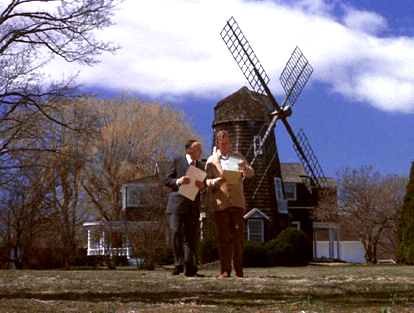
Most of the action takes place in the Bruhl couple’s picturesque East Hampton home with just a handful of characters. I assume that this is a pretty faithful adaptation of Ira Levin’s original stage play, as one can see that the small cast spending most of the time inside the Bruhl home would suit a stage presentation. This makes us focus entirely on the writing and performances that are the most important elements in any worthwhile drama. Both of these elements make Deathtrap into a terrifically entertaining comedy-thriller. 

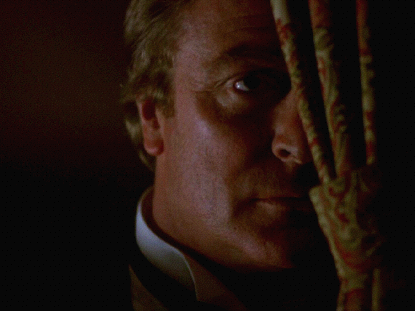
Michael Caine is certainly sympathetic in his plight as Sidney Bruhl. He seems to have the ideal life of a famous playwright working in the privacy of his unique country home of a converted windmill. He has a proud display of the many weapons and props used in his hit plays. His lovely and wealthy wife Myra is devoted to him. Yet Sidney sees his prestige and livelihood slipping away from him because of his recent string of failed plays. Our very first sight of Sidney Bruhl is a chilling close up that displays the intensity of the shame and rage he feels watching his latest work dying on stage during opening night. We are immediately convinced that Sidney Bruhl will react drastically. 

Sidney’s initial reaction involves getting really plastered at a Broadway bar. Later he humorously vents his fear and frustration to his supportive wife who fails to reassure him. When Myra gives Sidney the package he has just received containing the terrific first play by one of his former students, it is not long before we see another patented, reptilian Michael Caine glare. This time there is cold-blooded, opportunistic fervor in Sidney’s gaze that even his adoring wife can’t miss. 

Once Sidney agrees that maybe Myra is right to suggest meeting with young Clifford Anderson to discuss a playwriting collaboration, the plot is in full gear. We are sharing Myra’s suspicions about what her husband has in mind; suspicions we are all too eager to believe and that she can’t quite bring herself to accept. 

Dyan Canon is a lot of fun as Myra. She is trying her best to get Sidney to avoid committing murder without directly accusing him of that intention. Sydney’s bread-and-butter for years has been dwelling on such things in his mystery plots. She can’t tell if her husband is just indulging in a what-if flight of whimsy or if he is really ready to regain success as a playwright by killing and claiming his victim’s work as his own. 

Fresh from his success as the title hero of Superman (1978) and Superman II (1980), Christopher Reeve is great as the eager and aspiring writer Clifford Anderson. This character is a real change of pace for Reeve, to say the least. He completes the trio of characters that provide most of the conflict in the story. 

Much of the credit for the quality of Deathtrap belongs to Ira Levin who wrote the original hit stage play that this film adapts. The novelist that managed to wring fear, suspense, and irony out of big city apartment life in Rosemary’s Baby and suburban tranquility in The Stepford Wives (both also adapted into fine films) seems to be having even more fun with the idyllic small town life in Deathtrap. At the core of all three of these stories is the pursuit of an ideal lifestyle. Status and success are the goals that lure Levin's characters to commit evil acts. 

I know that director Sidney Lumet is one of those “important” directors, yet I must confess that I have not seen much of his work. However, I love his adaptation of the Agatha Christie mystery classic Murder on the Orient Express (1974). Deathtrap seems to be one of Lumet’s less revered films, but it is the most entertaining genre film one could hope for. It has laughs, suspense, surprises, and great performances. As Sidney Bruhl says, “Even a gifted director couldn’t hurt it.” Lumet and everyone else involved really knock ‘em dead with Deathtrap.

DETOUR (1945)

Director: Edgar G. Ulmer Writer: Martin Goldsmith (and uncredited Martin Mooney) adapting Martin Goldsmith’s 1939 novel Detour: An Extraor...