Showing posts with label George Reeves. Show all posts

Thursday, April 11, 2024

THUNDER IN THE PINES (1948)

Director: Robert Edwards

Writers: Jo Pagano, Maurice Tombragel

Producer: William Stephens

Cast: George Reeves, Ralph Byrd, Lyle Talbot, Denise Darcel, Marion Martin (as Marian Martin), Greg McClure, Michael Whalen, Vince Barnett, Roscoe Ates, Tom Kennedy, (and uncredited cast) Frank Hagney, Milicent Patrick, Arno Tanney, Jack Tornek, Joey Ray 

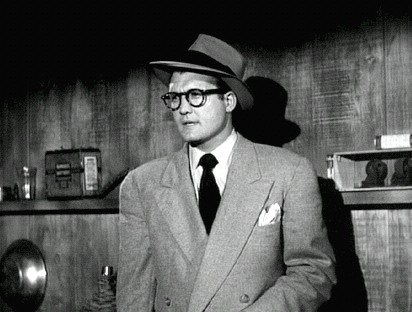
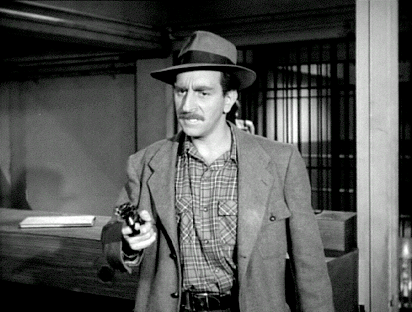
Wartime buddies Jeff Collins (George Reeves) and ‘Boomer’ Benson (Ralph Byrd) are now northern Wisconsin lumberjack foremen. Each of them has been secretly corresponding with a girl that they met in France during the war. When French beauty Yvette Cheron (Denise Darcel) meets both men at the Osega town train station, Collins and Benson realize that they are both after the same woman. Shifty, local businessman Nick Roulade (Lyle Talbot) has recently hired Collins and Benson separately to harvest the pines on different halves of his land. The two logging pals have become competitors to deliver the timber from their assigned areas by an April 1st deadline. The winner of the competition will not only win a bonus; he will also win the hand of the flirtatious Yvette. 

The Flashback Fanatic movie review 

There are some movies that seem to have trouble fitting neatly into a genre. Those are often highfalutin dramas that usually deal with heavy issues, and an audience will only line up for them when household names take the starring roles. However, some oddball B-films never intended to be anything more than light entertainment while somehow avoiding common genre classifications. One would think that a modest production would need to push an obvious and exploitable genre to hook an audience needing a reliable fix from a certain kind of story. Moviegoers will not need big production values or major stars if there is an intriguing mystery to solve, a criminal gang to defeat, a monster to destroy, or an Old West town to clean up. One then has to wonder just what was the intent behind Thunder in the Pines. 

I was surprised to learn that there have been over forty films about lumberjacks. During the first half of the 20th century, this line of work must have been widespread enough to get the attention of filmmakers. Still, lumberjacks were hardly the basis for a thriving film genre. Western, horror, and crime pictures would have seemed to be much safer and easier fare for the low-budget filmmaker to market. 

Nevertheless, Robert L. Lippert’s Screen Guild Productions (soon to be renamed Lippert Pictures) must have decided that the off-the-beaten-path environment and situations of Northwoods logging would provide an interesting backdrop for some macho shenanigans. In those days there also seemed to be more of an interest for wilderness-based adventures. Lippert must have been pretty enthusiastic about Thunder in the Pines to go to the trouble of having it made with sepia-tone prints. 

The obscure Thunder in the Pines is chiefly remembered for starring George Reeves. Prior to this film, Reeves had a long string of roles in B-films and notable appearances in a few prestigious pictures. Early in his career, Reeves had the small role as one of the Tarleton twins in one of the most famous films of all time, Gone with the Wind (1939). Just before his military service, he starred in 1943’s Oscar-nominated, World War II drama So Proudly We Hail! After the wartime service interruption of his career, George Reeves was back to B-films. This was frustrating for Reeves because his acting career seemed to be a casualty of bad timing. When he made Thunder in the Pines, Reeves was just three years away from becoming famous as Clark Kent/Superman in Superman and the Mole-Men (1951), which led to the Adventures of Superman television series (1952-1958). Despite landing a small role in the Oscar-winning From Here to Eternity (1953), Reeves was typecast as the Man of Steel for the rest of his life. 

Reeves’ co-star, Ralph Byrd, was another B-film veteran that had already become famous for portraying a comic strip hero. Byrd had made many appearances in small and supporting roles in movies throughout the 1930s. His claim to fame was starring in film adaptations of Chester Gould’s detective newspaper strip, Dick Tracy. Beginning in 1937, Byrd starred as Tracy in four Republic Pictures serials, two RKO Radio Pictures feature films, and 48 episodes of the Dick Tracy ABC television series (1950-51). Byrd also starred in other serials including another adaptation of a hero from the comics. Columbia Pictures’ serial The Vigilante (1947) had Byrd playing the masked, motorcycle-riding, crime-fighting cowboy published by DC Comics. 

Producer William Stephens had already co-starred George Reeves and Ralph Byrd earlier the same year in Jungle Goddess (1948). There they also played two pals that wind up pitted against each other. That previous film was a pretty dull jungle flick that gave actors Reeves and Byrd just a bit more dramatic meat to gnaw on, but it did not allow them any of the rambunctious fun found here. For Thunder in the Pines, they play wartime chums that became peacetime lumberjacking partners goaded into competing against each other for love and money. Reeves and Byrd approach their roles with gung-ho enthusiasm that adds a lightly comedic edge to their mutual antagonism. 

Stephens’ unfulfilled intention was to keep these two actors as a team in a succession of pictures. With the previous film set in the African jungle, Thunder in the Pines located in the Northwoods, and a third movie planned to take place in South America, perhaps the intent at the time was to make the Reeves/Byrd duo the low-budget-adventure-film answer to the Bob Hope/Bing Crosby team in their “Road” pictures. Thunder in the Pines is certainly not intent on being as satirical and musical as the “Road” films, but it features plenty of light-hearted conflict set in an unusual locale. 

The draw for today’s movie buffs seeking out this film is seeing Superman vs. Dick Tracy. Since neither Reeves’ Jeff Collins nor Byrd’s ‘Boomer’ Benson have any super powers, it should be a fair fight. The story begins with these two pals slugging each other in a barroom. This maniacal, manly fun is only interrupted when they pause to ogle shapely, blonde Pearl (Marion Martin) strutting into the tavern. Then they make a note to one another to resume their brawl at a later date and have at their beers. Throughout this film, Collins and Benson are on the verge of pummeling each other at every opportunity. 


One may wonder where hardworking lumberjacks find the energy to waste clobbering each other for kicks in their down time, especially as we see plenty of tree-cutting action without a single chainsaw to be found. Well, that’s easy for Collins and Benson, since they are the logging ramrods just barking orders all day at their men who are doing all of the grunt work. 


In the small logging town of Osega, it seems that there is nothing to do but work, drink, and fight. All work and no play make lumberjacks punch drunk. One magical aspect of this little burg is that the few women who ever set foot in town are always knockouts that can break up the monotony of beer and brawling for our heroes. 

Marion Martin, as Pearl, is my favorite character in this thing. I suppose you are all probably thinking that just makes me a lech. Hardly. I’m a lech and a lush, so there! Martin was the sexy garnish to many cinematic concoctions throughout the ’30s and ’40s. Here in Thunder in the Pines, Martin gets some of the best lines and makes adlib mixology simple and dangerous. I guess if I were going to die of alcohol poisoning, it might go down easier if my bartender looked like Marion Martin. 


Pearl sashays into Osega, Wisconsin to hook up again with Nick Roulade, owner of the town’s tavern and large swaths of the surrounding woodland. B-movie stalwart Lyle Talbot plays Roulade. Talbot was a familiar face as an up-and-coming star during the ’30s at Warner Brothers, a very busy character actor in films of the ’40s and ’50s, and a prolific television performer. His Nick Roulade certainly qualifies as the heel in Thunder in the Pines. Not only does Roulade cheat at cards and try swindling the two lumberjacking partners he has pitted against each other, he slobbers all over the luscious Pearl that has come carrying a torch for him all the way from Chicago to be his barmaid. I can’t say I blame the guy, but then Nick Roulade immediately fixates on the very next nubile visitor to Osega. 

Once Yvette Cheron rolls into this little logging town, the greed and gonads get out of control. Yvette seems to enjoy wrapping every guy’s woody around her little finger. She knowingly encourages Jeff Collins and ‘Boomer’ Benson to compete for her. However, she is all too aware of the interest Nick Roulade has also taken in her. Yup, she’s a beautiful, bad influence. French actress Denise Darcel plays her without a sense of malice, but she sure can be fickle. Darcel first caught my eye as the voluptuous spitfire Lola in Tarzan and the Slave Girl (1950). 

Apparently, a town as small as Osega can only make room for visitors if they are gorgeous gals. Milicent Patrick plays the last of the only three women we ever meet in Osega. She’s the beautiful brunette in black that drops in at the film’s finale. Patrick was a model, a bit player in films, and had occasional guest roles in television series, but she made her greatest filmic impact as an artist. She had worked in animation for Walt Disney Productions. Later, Patrick would become involved in special effects makeup at Universal Studios and designed such famous movie monsters as the alien of It Came from Outer Space (1953) and the Gill-man of Creature from the Black Lagoon (1954). 

Thunder in the Pines succeeds almost entirely because of this interesting cast. It has the added eccentricities of our two heroes’ manic behavior and the unusual locale where they brawl and bicker. Since this is all tossed off with a light touch, it makes an amusing, offbeat oddity for B-film fans. So, button up your flannel shirts and pour yourself a cold one to get braced for this lumberjack lunacy. Timberrr!!!

This post was contributed to The 2nd Annual 'Favorite Stars in B Movies' Blogathon hosted at Films From Beyond the Time Barrier.

Sunday, May 28, 2023

HOLLYWOODLAND (2006)

Director: Allen Coulter

Writer: Paul Bernbaum

Producer: Glenn Williamson

Cast: Adrien Brody, Ben Affleck, Diane Lane, Robin Tunney, Bob Hoskins, Jeffrey DeMunn, Molly Parker, Lois Smith, Caroline Dhavernas, Joe Spano, Larry Cedar, Kathleen Robertson, Zach Mills, Diego Fuentes, Gareth Williams, Dash Mihok, Ted Atherton, Brad William Henke, Phillip MacKenzie, Kevin Hare, Neil Crone, Seamus Dever, Gareth Williams, Joan Gregson, Richard Fancy, Dendrie Taylor. Jason Spevack, Erin Gooderham, Terry C. Barna, Bill Lake, Brendan Wall, Jeff Cowan, David J. MacNeil, Tim Campbell, Michael Rhoades, Donald Burda, Lorry Ayers, Joseph Adam, Sven Van de Ven, Ayumi Iizuka, Jack Newman, Natalie Krill, Charlie Lea, Gray Powell

On June 16, 1959 in Los Angeles, California, actor George Reeves (Ben Affleck), famous for his television role as Superman, is found dead of a bullet wound to the head in the bedroom of his Benedict Canyon home. Seedy private detective Louis Simo (Adrien Brody) is hired by Reeves’ mother Helen Bessolo (Lois Smith) to investigate her son’s death. Helen does not believe the official suicide verdict. Initially, Simo is just trying to stir up publicity by questioning the validity of the police investigation into Reeves’ death. However, as Simo discovers more about Reeves’ life, he begins to believe that the actor may have been murdered.

The Flashback Fanatic movie review

Nowadays, due to the superhero genre profitably established in the movie mainstream, actors are eager to portray comic book characters. Landing such roles is seen as just another indication of a performer’s versatility and bankability.

Unfortunately, when George Reeves starred as the title character on the Adventures of Superman television series during the 1950s, he felt that he was stuck in a professional rut. Like plenty of other actors playing larger-than-life characters (Bela Lugosi as Dracula, Johnny Weissmuller as Tarzan, Basil Rathbone as Sherlock Holmes, etc.), Reeves was typecast. His success as Superman, at least as far as the movie studios were concerned, caused limitations in his public perception and imposed limitations on his choice of roles. Ironically, 1978’s Superman was the big-budget production that earned the critical and financial success that began to gain respect for comic book superheroes and their actors in films.

The disappointment George Reeves felt about the direction of his acting career provides a possible motive for his suicide. Death by self-inflicted gunshot wound was the official determination given by the LAPD and supported by witness statements and autopsy findings. But real life is usually not as neat and tidy as the conclusion of an Adventures of Superman episode. As is often the case in criminal investigations, there were unexplained details and oversights in the crime scene investigation and autopsy. Some of the relationships George Reeves had and peculiar events in his life raised the possibility of foul play. There were also plenty of Reeves’ friends and his mother who could not believe that George Reeves would kill himself.

Hollywoodland details the final decade of George Reeves’ life and the investigation into his death by the fictional detective character Louis Simo. Reeves’ mother Helen Bessolo actually did seek further inquiries into her son’s death. This film is quite true to the facts of the Reeves case while adding an additional dramatic angle of the Simo character finding parallels between Reeves’ life and his own.

Adrien Brody stars as private investigator Louis Simo. He is fine as the down-on-his-luck hero of the story that has suffered big disappointments in his life. Simo seeks to exploit the Reeves case as a way to generate some headlines that can raise his own professional profile and boost his career. It is only as Simo sees more of his own life’s frustrated ambitions reflected in the life of George Reeves that he develops some sincerity in his search for the truth.

After a two-year lull in his career, Ben Affleck landed the role of George Reeves. This was an opportunity for Affleck to give a performance with more depth than those in his past big-budget spectacles. Affleck really rises to the occasion as he captures Reeves’ charm, humor, and frustration while earning the audience’s sympathy. It is oddly fitting that Affleck, an actor who has played two different superhero roles (in 2003’s Daredevil and multiple appearances as Batman since 2016) and was going through his own career downturn, would portray another actor whose career was stifled by playing a superhero. This award-winning role signaled Affleck’s comeback for quality roles and films.

George Reeves had a longtime romantic relationship with Toni Mannix, the wife of MGM film studio vice president Eddie Mannix who was suspected of ties to the Mafia. This unusual relationship was an open secret and accepted by Eddie. As Toni Mannix, Diane Lane perfectly captures the aging former starlet affecting a certain Hollywood refinement in her speech and manner. There is a passionate desperation in her need for the relationship with the younger Reeves who she wants to be her kept man.

Robin Tunney is funny, insensitive, and a bit pathetic as Leonore Lemmon, the crude, younger woman who prompts George Reeves to end his relationship with Toni Mannix. She has contentious interactions with almost everyone and drives home the sense of hopelessness toward the end of Reeves’ life.

There are many other fine performances to be found in this film. Bob Hoskins as Eddie Mannix, Joe Spano as Eddie’s publicity manager Howard Strickling, Jeffrey DeMunn as Reeves’ agent Art Weissman, Molly Parker as Louis Simo’s ex-wife Laurie, Caroline Dhavernas as Simo’s secretary/girlfriend Kit, and Lois Smith as Reeves’ mother Helen Bessolo all give often understated and genuine performances that always feel just right.

Director Allen Coulter and screenwriter Paul Bernbaum have a unique approach to the frustrating Hollywood mystery of George Reeves’ death. They use the investigation by the fictional detective character of Louis Simo to give the audience facts about the Reeves case that provide multiple scenarios for the actor’s demise. They make Simo more than just a narrative gimmick by having him grow as a character when he gains perspective from the Reeves tragedy.

As a George Reeves fan, I had read quite a bit about his life, his Superman role, and his tragic death. I feel that Hollywoodland makes a sincere attempt to be honest and accurate about the last years of Reeves’ life. It is fun seeing some preparations for Reeves assuming his Superman role and scene recreations typical of the television show. Aside from one memorable bit of Reeves clowning around on the Adventures of Superman set, there is little indication of the fun and joy that those close to Reeves have said was also part of the man’s character. That is hardly a fault of this fine film. Director Coulter has said that he was not striving to just do a biopic about the life of George Reeves. The story uses Reeves’ death as a means of reevaluating one’s life and finding the worth in it.

Sunday, May 21, 2023

SUPERMAN AND THE MOLE-MEN (1951)

Director: Lee Sholem

Writers: Richard Fielding (pseudonym for Robert Maxwell and Whitney Ellsworth), based on the Superman comic book character created by Jerry Siegel and Joe Schuster

Producer: Barney A. Sarecky

Cast: George Reeves, Phyllis Coates, Jeff Corey, Walter Reed, Stanley Andrews, Beverly Washburn, Frank Reicher, J. Farrell MacDonald, Ray Walker, Hal K. Dawson, Phil Warren, (and uncredited cast members) Billy Curtis, Jerry Maren, John Baer, Byron Foulger, Margia Dean, Harry Harvey, John Phillips, Johnny Roventini, John T. Bambury, John Barton, Stephen Carr, Bill Coontz, Russell Custer, Adrienne Marden, Jack Lomas, Irene Martin, Frank McLure, William H. O’Brien 

Just before the planet Krypton exploded, an infant was sent to Earth in an experimental rocket ship. Krypton’s sole survivor was found by the Kents, a childless, rural couple. They adopted the alien orphan and named him Clark. Although he appeared perfectly human, Clark Kent developed superhuman abilities. Upon reaching adulthood, Kent assumed another identity as Superman to use his fantastic powers to help mankind. Now working for the Daily Planet newspaper, Kent (George Reeves) and fellow reporter Lois Lane (Phyllis Coates) are covering the story of the world’s deepest oil well having just been completed in the small town of Silsby. Two strange, short humanoids (Billy Curtis and Jerry Maren) have come up out of the well shaft and are panicking the town’s citizens. Dealing with a potential menace from beneath the earth and the threat of mob violence is a job for Superman. 

The Flashback Fanatic movie review 

Although there had been many precursors to Superman in myth and fiction, his 1938 introduction in the first issue of Action Comics established the popular template for the superhero genre: a protagonist with incredible powers, a flashy costume, a secret civilian identity, and a devotion to fighting evil. The hundreds of costumed heroes to follow owe their very existence to the Man of Steel. 

Ironically, after Superman’s young creators Jerry Siegel and Joe Schuster had their comic strip submission roundly rejected as being too wild an idea by newspaper syndicates, Superman became a massive hit as an original comic book character that proved the relatively new medium of the comic book did not need to keep reprinting newspaper comic strips. Within three years of his comic book introduction, Superman seized his own newspaper strip, flew over the airwaves in a nationally syndicated radio program, and dashed across the silver screen in a series of 17 animated cartoon shorts. Just ten years after first landing on newsstands, Superman made his live-action film debut in the movie serial Superman (1948) starring Kirk Alyn. That was the most successful movie serial ever made and the sequel serial Atom Man vs. Superman appeared in 1950. 

Having conquered just about every form of mass media, it was inevitable that in the ’50s, the Man of Tomorrow would take on that soon-to-be-dominant medium of the future: television. Yet before the production of a series would be undertaken, a stand-alone film was made that actually seemed to serve as a TV series pilot. In 1951 the trial flight of that decade’s iconic television series Adventures of Superman (1952-58) landed in movie theaters as Superman and the Mole-Men. 

While the story is quite simple, Superman and the Mole-Men has an intention a bit more sophisticated than the frantic and repetitive action antics of the previous movie serials. This is not just a good guy fights bad guys set up. The story demonstrates that villains don’t have to be bank robbers, mad scientists, or inhuman monsters. Normal folks can be turned into a lawless and reckless mob by panic, ignorance, and a rabble-rousing lout. After all, this was the era of the Red Scare and McCarthyism when people were being goaded to look everywhere for the communist threat that was supposed to be infesting America. Paranoia was in the air and could be exploited for political advantage. It also seems pretty apparent that at the heart of such animosity there was often a mean streak of intolerance. Of course, it was expedient to brand someone a commie and persecute or blackball them if they represented a position contrary to the interests of an industry’s bottom line. Hollywood was ground zero for such attacks.

The unknown motives of the mole-men causing fear among the Silsby citizens is certainly understandable, but caution and restraint are advisable. Knee-jerk, reactionary violence is shown to pose great risks to everyone’s safety. It is also shown that such shoot-first-ask-questions-later idiots have already stepped so far over the line of reason that they can’t learn from their mistakes. They even run the risk of endangering the entire town that they claim to be protecting. Despite the sci-fi trappings of the film’s hero and the subterranean creatures, the story is chiefly concerned with the rash human behavior that clashes with the fantastic beings. This is what maintains interest in a fairly simple story with simple characters. 


Of course, everyone was drawn to the movie primarily to see the famous comic book character realized on the movie screen. In this short 58-minute film, there is just enough time to see Superman withstand punches and bullets, bust guns, overpower a lynch mob, and fly. Clark Kent dashing into an alley to emerge seconds later as Superman and take off is a clip re-used many times in the first season of the subsequent television series. There are a couple other quick take offs shown later as well as a slow landing that was never repeated. The only other flying shots are a point-of-view looking down at the lynch mob Superman is flying past and two brief glimpses of Superman catching a mole-man falling off a dam. One of those shots uses a bit of animation to substitute for a flying actor similar to what was used extensively in the movie serials. The Superman flying techniques would continue to get more refined during the television series. 

Since this entire story takes place in the small town of Silsby, we do not see reporters Clark Kent and Lois Lane in their usual workaday settings of the city of Metropolis and the Daily Planet newspaper offices. However, their characterizations are firmly established in this film. Lois Lane is feisty and often frustrated with Clark Kent’s evasive behavior. Of course, Kent is trying to maintain the secret of his identity as Superman and enjoys a bit of private amusement harboring that knowledge. It is also fun for the audience when Kent almost slips up referring to something Superman has done in the first person. 

Since 1939, George Reeves had played small roles in A-pictures and starred in B-films. He had an important role in the 1943 Oscar-nominated wartime drama So Proudly We Hail! Then, like many actors during World War II, Reeves’ career was interrupted by his wartime service. After the war, Reeves seemed to have difficulty reestablishing his acting career momentum. When he first donned the cape of the world’s greatest superhero in 1951, Reeves was just taking on another acting job. Upon resuming his Superman role for the initial 26-episode package of the Adventures of Superman television series, Reeves may have hoped, as others involved thought, that no sponsor would pick up the show. One year later the Kellogg’s cereal company agreed to sponsor the program and it became an enormous syndicated hit. Reeves would continue playing Clark Kent/Superman for five more seasons. 

Although he had no great affection for the character and later resented being typecast by his success as Superman, Reeves did appreciate the role’s importance to the young fans. George Reeves was a true pro and a fine actor that made his Superman real and appealing. His Superman is a hero because he wields his great powers wisely and compassionately. Reeves’ Superman is not a bully spoiling for a chance to showoff, but when he clobbers someone they deserve it. 

Reeves’ interpretation of Clark Kent is quite interesting. He did not portray the mild-mannered reporter as a complete klutz and coward. He made Kent just as likable and respectable as Superman. That may have made the flimsy disguise of a pair of glasses and a less forceful manner a pretty risky way to maintain a secret identity, but it probably helped Reeves maintain his own interest playing the character and maintained the audience’s interest between bursts of Superman action. 

It must also be noted that Clark Kent’s previous portrayals in radio and the movie serials were never as wimpy as the comics sometimes had him behave. Since Robert Maxwell had produced the radio program, co-wrote the Superman and the Mole-Men script, and would soon produce the first season of the Adventures of Superman television series, he may have been instrumental in making Clark Kent a character that does not lose the audience’s respect, as they must spend plenty of time with him before he saves the day as Superman. 

Reporter Lois Lane had always been pretty daring in her efforts to get a big scoop. Phyllis Coates’ portrayal of the character was independent, assertive, and could be quite dismissive of Clark Kent, despite his intelligence and integrity. Beneath all of Lois’ negativity was probably a sense of competitiveness and an unrealized resentment that her mild-mannered co-worker might be the Superman of her dreams who will not share his secret with her. 

Phyllis Coates has starred in plenty of B-films and serials and guest-starred on many television series, but, like her co-star George Reeves, she will always be most remembered for her role in Superman and the Mole-Men and the subsequent television series. Once the first season of the show was picked up for syndication and more seasons needed to be made, Coates was not available and was replaced by the Lois Lane of the movie serials, Noel Neill. 

The actors playing the first two mole-men that climb out of the oil well shaft, Billy Curtis and Jerry Maren, were two of the munchkins in The Wizard of Oz (1939). They are befriended by little Beverly Washburn, who would later play a member of the creepy Merrye family in the cult film Spider Baby (1964/released 1967).


Prolific character actor Jeff Corey plays lynch mob leader Luke Benson. Right after this film, the House Un-American Activities Committee lynched Corey’s career. Despite Corey having abandoned his interest in communism years earlier, he was not going to provide names of people for the committee to harass. While he was blacklisted as an actor for 12 years, Corey became a noted acting teacher. Fortunately, Corey resumed acting in the early ’60s appearing in many more films and became a familiar face on television guest-starring in a multitude of series. 

Nowadays, superhero films are a mainstay at the box office. Modern film production technology has made the special effects challenges of superheroes far easier to overcome. Hence, there has been a wave of overblown spectacles trying to push people out of their media cocoons at home to see something ideal for the big screen. Ultimately, this leads to apathy. When anything can be shown effectively and in excess, there is no longer an awe factor that will sustain audience involvement. There had better be some charm and humanity to make all of the razzle-dazzle matter. Those were the superpowers of George Reeves that really make Superman and the Mole-Men work.

STANLEY (1972)

Director: William Grefé Writers: Gary Crutcher, William Grefé Producer: William Grefé Cast: Chris Robinson, Alex Rocco, Steve Alaimo, Ma...