Showing posts with label action. Show all posts

Saturday, April 18, 2026

GOOD GUYS WEAR BLACK (1978)

Director: Ted Post

Writers: Joseph Fraley, Bruce Cohn, Mark Medoff

Producer: Allan F. Bodoh

Cast: Chuck Norris, Anne Archer, James Franciscus, Lloyd Haynes, Dana Andrews, Jim Backus, Soon-Tek Oh, Lawrence P. Casey, Joe Bennett, Jerry Douglas, Anthony Mannino, Stack Pierce, David Starwalt, Michael Payne, Benjamin J. Perry, Michael Stark, Pat E. Johnson, Virginia Wing, James Bacon, Kathy McCullen, Aaron Norris, Don Pike

In 1973, a special unit of U.S. commandos called the Black Tigers, led by Major John T. Booker (Chuck Norris), is sent into Vietnam to rescue American POWs. The team finds no one to rescue from the prison camp and is soon under attack. Their radio call for pickup by choppers is ignored. The Black Tigers realize they have been set up and abandoned, so they must make it out of Vietnam on their own. Five years later in Los Angeles, California, Booker is now teaching political science at UCLA. A reporter named Margaret (Anne Archer) approaches him with information regarding his doomed Black Tigers mission. Booker is reluctant to revisit his past until he and other surviving members of the Black Tigers are being targeted for assassination.

The Flashback Fanatic movie review

Due to the recent passing of action movie icon Chuck Norris, I felt the urge to revisit the film that first made me aware of the martial arts champion-turned-actor. Its trailer featured Norris’s John T. Booker character jumping over the front of an onrushing automobile to dropkick through its windshield. I am convinced that stunt is what sold the public on this movie and made Good Guys Wear Black a box office hit. As cool as that powerful promo was, I did not see this film until Norris had become a household name and I had already seen several of his later ass-kicking epics.

The six-time middleweight world karate champion had been making appearances in small roles for films and television requiring his martial arts expertise ever since his blink-and-you-miss-him bit in the Dean Martin-starring Matt Helm spy flick The Wrecking Crew (1968). Norris got some real attention when he played martial arts star Bruce Lee’s opponent in a fight to the death in The Way of the Dragon (1972), aka Return of the Dragon. After encouragement from one of his martial arts pupils, actor Steve McQueen, Norris started to seriously pursue film acting. 1977’s Breaker! Breaker! was Norris’s lead actor debut. Released at the height of America’s CB craze, it cast Norris in the role of a trucker facing off against a small town’s corrupt law enforcement. The film was generally dismissed by the critics (a common attitude toward most of Norris’s films), but it managed to be profitable. It was a notable film credit for Norris that gave him the opportunity to again play the lead in his next film, Good Guys Wear Black.

Chuck Norris was just as determined to succeed in films as he was in his karate matches. The idea behind the film’s story was Norris’s. He worked out the story with another of his martial arts pupils and kept pitching the project to different producers. Wisely, Norris wanted to star in a plot-driven movie that was not just a string of martial arts fights. After plenty of rejections all over Hollywood, he finally convinced a producer to greenlight the project when Norris reasoned that, even if only half of the Norris karate fans showed up to see his movie, the low-budget film would be profitable.

Good Guys Wear Black is an action film that is also a political thriller. As such, I find its plot more intriguing than most action films. Norris’s John T. Booker is not looking for trouble or associated with the military anymore. He is trying to move beyond his wartime past and live a peaceful life as a civilian. During his lecture to his political science students, Booker expresses disapproval of the United States involvement in the Vietnam War. One can only assume the setup that doomed the POW rescue mission Booker led has given him an attitude with more nuance than “just follow orders.” Yet, despite the betrayal of his last Black Tigers team mission, he refuses to obsess about the awful incident he survived and won’t let bitterness spoil his new life.

Like many political thrillers, Good Guys Wear Black has a strong streak of anti-establishment sentiment. It condemns those in the government whose machinations are used to pursue their selfish goals and cover their tracks. The theme of political expedience sacrificing peoples’ lives is a powerful one. Ultimately, the film does not glamorize war and stresses that soldiers are not just expendable assets.

The nefarious plot based in political corruption works well to serve a low-budget film. Individually assassinating various former commandos amid their postwar civilian lives is meant to be lowkey. It is not the sort of extravagant operation that draws a lot of public attention in the story. This somewhat stealthy tactic is easier for a budget-conscious film to depict.

With director Ted Post at the helm, this project was in good hands. Post had an extensive background in television and film projects. Notably, he had twice directed Clint Eastwood in the Western Hang ‘Em High (1968) and the second Dirty Harry film, Magnum Force (1973). Post was experienced enough to know how to be sure that the story was driven by characters’ motivations and could deal with many production challenges of time and budget. However, Post has stated that, due to a very tight schedule, he considered Good Guys Wear Black an unfinished film; he wanted more time to further develop the script.

The film’s only deficiency that has always troubled me is the night shooting during the Black Tigers’ Vietnam mission early in the story. Very poor image quality mars what should have been some exciting action. I have quadruple-dipped for this flick in various formats over the years, and the footage for that sequence always seems underlit and poorly focused. Ted Post was a seasoned pro who certainly knew what he was doing, so perhaps something went awry in the sequence’s processing at the film lab.

While this is an early role for Chuck Norris, I think he does just fine. His acting chops may not be as adept as his chopsocky skills, but he makes for an appealing and capable protagonist. It is not only his good looks and fancy footwork that have made him an enduring action star. Norris has a presence of calm determination, no doubt a result of his martial arts discipline. Norris does not pose and strut. He projects the confidence of an accomplished person with nothing to prove. That makes him a believable hero.

The always adorable Anne Archer co-stars as the beautiful and enigmatic reporter Margaret. We never learn Margaret’s last name, and she knows one helluva lot about those secret Black Tiger commandos. While she may seem to be just determined to follow up on an intriguing lead from an unnamed source in Washington, D.C., Booker is a little suspicious. He wonders if Margaret’s only motivation is journalistic ambition. This ambiguity adds a bit more paranoia to the narrative. Nevertheless, her vague backstory does not keep John T. Booker from accepting her carnal advances, and I can’t say I blame him. Afterall, how can anyone who looks like Anne Archer not be a nice girl? Yeah, if she’s really a femme fatale, a dope like me would be dead meat walking when she's around.


Ironically, the most trustworthy ally Booker has is Murray Saunders (Lloyd Haynes), the CIA operative that sent the Black Tigers on their ill-fated mission in 1973. Five years later, Saunders has learned of a plot to kill the surviving members of the mission and that he may also be a target. He provides some stoic humor and helps Booker confront the threat they are under.

James Franciscus is great as the charismatic and calculating Senator Conrad Morgan who aspires to be the U.S. Secretary of State. He has the movie-idol looks and razor-sharp diction that command attention. This guy is the perfect statesman who delivers every line with dynamic verve. Franciscus makes a powerful impression with his limited screen time, and his dialogue delivery provides as much energy as Norris’s karate moves.

Landing seasoned talents for low-budget films can elevate them beyond mere exploitation. Case in point: Here in a small and important role is veteran actor Dana Andrews as U.S. Under Secretary of State Edgar Harolds. His final scene is a chunk of exposition that Andrews makes interesting, even a bit touching, with his wry and melancholy delivery as he laps up the booze.

Back in 1978, people may have been expecting this film to only provide nonstop chopsocky action. Today, people expect every action movie to feature gigantic budgets and ever more outlandish CGI-tweaked stunts that pacify rather than involve ever-shortening attention spans. I find Good Guys Wear Black positively refreshing since it stoops to neither generation’s expectations. It has nothing revolutionary going on. It is just meant to give us a hero beset by a political plot that requires him to occasionally kick some ass as he tries to save his own. Yet it helped define the action movie genre that would soon dominate the 1980s and launched the film fame of one of its preeminent stars, Chuck Norris.

Thursday, September 25, 2025

DR. NO (1962)

Director: Terence Young

Writers: Richard Maibaum, Johanna Harwood, Berkley Mather adapting Ian Fleming’s novel

Producers: Albert R. Broccoli, Harry Saltzman

Cast: Sean Connery, Ursula Andress, Joseph Wiseman, Bernard Lee, Jack Lord, Lois Maxwell, Anthony Dawson, Eunice Gayson, John Kitzmiller, Zena Marshall, Peter Burton, Marguerite LeWars, Louise Blaazer, Yvonne Shima, Michel Mok, William Foster-Davis, Dolores Keator, Reggie Carter, Colonel Burton, Timothy Moxon (uncredited), Milton Reid (uncredited)

When British Intelligence operative John Strangways (Timothy Moxon) goes missing in Jamaica, British Secret Service Agent James Bond (Sean Connery) is sent to investigate. Strangways was monitoring radio jamming transmissions detected during failed U.S. space program rocket launches from Cape Canaveral. Bond works in collaboration with CIA agent Felix Leiter (Jack Lord). Almost immediately upon Bond’s arrival in Jamaica, he is in mortal danger from various assassins.

The Flashback Fanatic movie review

Former British Intelligence officer and writer Ian Fleming is supposed to have selected the name for his world-famous spy hero from an author’s name on a book about birds. Fleming wanted a plain sounding name, and he thought “James Bond” was the most plain one he could have imagined. In retrospect, it is the perfect name that only seems anonymous until the feats of the character himself make that name notable. It is a solid and decisive sounding name that is unforgettable after reading just one of Ian Fleming’s stories.


James Bond's creator, author Ian Fleming

James Bond debuted in Fleming’s 1953 novel, Casino Royale. With the Cold War well underway in a world coming to grips with mankind’s newfound nuclear capabilities for push-button Armageddon, Fleming’s British espionage operative grappled with international security threats that had readers on edge. There are those who prefer to ignore bad news and others who are all too aware of civilization’s precarious balancing act. To comfort that latter segment of the public, James Bond entertained them with the hope that there are always some anonymous brains and brawn bound by duty to spoil the schemes of the West’s enemies. To put it more simply, being entertained by Bond’s adventures was making the best of a bad situation.

All that Ian Fleming intended with his Bond stories was to provide some exciting escapism informed by his background as an intelligence officer, his own sense of refinement, and perhaps a bit of wish fulfilment. That last consideration certainly figured into the appeal of the Secret Agent 007 character to the readers. Despite the pooh-poohing of many critics, Ian Fleming’s James Bond stories were very popular. When it became known that U.S. President John F. Kennedy was a fan, the sales continued to climb.


Actor Barry Nelson as Bond. Jimmy Bond.

If ever there was a property ripe for filmic adaptation, it was James Bond. Before producers Albert R. Broccoli and Harry Saltzman arranged for making a film that they hoped would be successful enough to launch a series, American television beat them to the punch. Just one year after its publication, Casino Royale was adapted for a 1954 episode of Climax!, the CBS Network anthology series. While it is the first on-camera adaptation of Bond, Barry Nelson’s Americanized role of card shark Jimmy Bond is barely remembered. The constraints of a live television broadcast made palatable for the U.S. audience certainly compromised the fidelity to the edgier aspects of Ian Fleming’s first James Bond novel. It would not be until 1962’s Dr. No movie that Bondmania would begin.

This first James Bond film in the “official” Eon Productions series is quite faithful to Ian Fleming’s novel. That novel was the perfect template for this inaugural film. It has the mix of sex and violence in an exotic locale and plenty of bizarre and grandiose incidents that can’t go unnoticed to the moviegoing public. There is the jet-setting aspect found in so many films of the 1960s that took the audience to picturesque, foreign locations. The title villain is a cold-blooded and grotesque genius housed in a secret, high-tech lair with plenty of henchmen. Dr. No is an operative of a vast organization bent on world domination. The violence is ruthless on the part of both the villain and the heroic James Bond. The hero is a man of class and sophistication that helps himself to the carnal pleasures of the many women that he attracts. As the film series progressed, the scripts would stray ever further from the source material they were adapting, yet those offbeat elements remained vital to the ongoing series’ success.

Every bit as vital was casting just the right actor in the lead role of James Bond. As is often the case for establishing larger-than-life series characters, going with a relatively unknown actor can have fantastic results. That actor can make the part their own without having to defy an already defined public image. That was never proven on a grander scale than with Sean Connery’s first performance as James Bond. To the millions of Bond fans since, Connery seems like an obvious choice, yet there were misgivings at the time. Both author Ian Fleming and director Terence Young thought that the Scottish actor from a working-class background was lacking the refinement that they envisioned for James Bond. Once Young had Connery outfitted with those Saville Row-tailored suits and imparted him with some urbane manner, Connery’s rugged good looks and confidence perfectly complimented the Agent 007 image.


While Sean Connery’s James Bond perfectly embodies the appeal of the character and immediately became an icon of the 1960s, he also roused some critical backlash. As with Ian Fleming’s original novels, the hero was often vilified for his promiscuity and cold-blooded violence. No doubt, the critics feared that the stories legitimized such behavior, which they thought made him just a glamorized thug. However, that was precisely the edgy attitude that thrilled the audience. It lent a visceral, human element to the extravagant adventures.

Dr. No is the launching pad for what would become the action film genre. It began instilling the norm of ruthless violence for movie heroes. There were certainly precursors to such deadly tactics in the Mr. Moto and Tarzan films, but the Bond films elevated the violence with cool panache. You don’t have the cliché of a witty one-liner delivered by the hero just before or after dispatching a villain without it being established by Connery’s Bond in Dr. No. This was not just a strained gag in this film and those to follow, it was an indication of the calloused conditioning of an experienced spy with a license to kill. The filmmakers also had a more pragmatic reason for this humor. They knew they were pushing movie norms with the sex and violence and thought that a bit of wit would take the edge off the bed-hopping and brutality as far as the censors were concerned. Fortunately, their instincts were correct, and Dr. No was released with its edge intact.

One of my favorite things about this first James Bond film is that we are allowed time to settle into this remote character’s circumstances. We get no background about him; we only get to know him through his actions. But we have the time to get fully engaged in Bond’s mission through brief moments of lonely intimacy. Bond’s simple precautions of lightly sprinkling talcum powder on his attaché case latches and pasting one strand of his dark hair across the gap between his twin closet doors will inform him if his hotel room has been searched while he is away. These are stealthy security procedures that remind us of how careful a lone secret agent must be. Arriving back in his room, Bond unwinds with a drink and presses the cold glass to his forehead after a trying, hot Jamaican day. These little touches ground the idealized Bond character in a mortal reality that allows us to vicariously experience his adventures.

We are also introduced to the series’ supporting cast of M (Bernard Lee), his commander at the British Secret Service, and Miss Moneypenny (Lois Maxwell), M’s secretary. In addition to assigning Bond to his missions, these two brought a bit of levity into the stories. M often criticizes Bond’s judgement and comes off almost like a school principal reprimanding an unruly student. He almost never fails to bristle at Bond’s sophisticated taste and independence. Miss Moneypenny and Bond always engage in unfulfilled flirtations, while trying to avoid the disapproval of the all-business M.

Aside from a more measured pace in Dr. No than later Bond films, what may strike the casual viewer is an absence of gadgets. That Secret Service gadget-master Q (Desmond Llewelyn) would not appear until the next film in the series. The only hardware Bond is dealt, at M’s insistence, is a Walther PPK pistol to replace Bond’s preferred Beretta.

Another recurrent character in the original Bond stories is CIA operative Felix Leiter. He is played in this first Bond film by Jack Lord. Here Leiter seems as capable and handsome as Bond himself. Lord brings a lot of presence to what seems like little more than a bit part as played by other actors in some later Bond films. Of course, Jack Lord would gain immortality as Steve McGarrett, the head of the law enforcement team in the original Hawaii Five-O television series (1968–80).


While Connery’s first scene introducing his James Bond ranks as one of the most significant events in cinematic history, Ursula Andress in a white bikini rising from the surf on a Jamaican island beach is a stunning sex symbol moment. That is one of the finest incarnations of that feminine fantasy image that would soon be termed the “Bond girl.” As the independent diver and seashell collector Honey Ryder, Andress combines carnal allure and naivety that makes her immediately likable. The Swiss actress had only been in a few small parts in a handful of films, but her Dr. No role brought her immediate international fame. Andress would go on to star in films of many genres with her unique beauty often being their most outstanding feature. It is rather ironic that the most famous Bond girl appearing in the first Bond feature film would later play Vesper Lynd in the Bond spoof Casino Royale (1967). The character of Vesper Lynd was Bond’s love interest in the very first Bond novel.

Ursula Andress, as Honey Ryder, is often celebrated as the first Bond Girl, but it is Eunice Gayson’s Sylvia Trench that is the first woman we see score with Bond after losing to him at the casino. Sylvia Trench is also the only one of Bond’s lovers to appear in more than one film until Madeleine Swann (Léa Seydoux) in Spectre (2015) and No Time to Die (2021). Perhaps the most noteworthy contribution the Sylvia Trench character made to the series is that she inspired Bond’s introduction, which has become one of the most famous film quotes of all time: “Bond. James Bond.”

Bond creator Ian Fleming’s inspiration for the title villain in the original Dr. No novel was Dr. Fu Manchu, the criminal protagonist of the popular series of novels by English author Sax Rohmer. No Bond film is complete without an ambitious, amoral mastermind. Joseph Wiseman’s Dr. Julius No sets the standard for Bondian supervillains. This calm, cold-blooded genius is a high-ranking operative of the international criminal organization SPECTRE. Wiseman’s performance is almost robotic, which compliments the accessories of his prosthetic, metal hands. Dr. No moves very deliberately, his face resists emotional expression, and he speaks in a controlled monotone that still manages to convey some suppressed rage and pride. His hospitality establishes another Bond film tradition of formality and good manners extended by the villain to his foe. Sometimes this is done as a token of respect and always as a display of supreme confidence.

Beginning in this very first James Bond film, music is an important stylistic element. That fantastic “James Bond Theme” serves as the opening credits musical accompaniment and would certainly become one of the most recognized tunes in the world. Monty Norman was credited as the theme’s composer, though it was arranged by future Bond film music maestro John Barry. There has been ongoing contention over the years about whether it was Norman or Barry that composed that famous theme music. Nevertheless, John Barry would go on to create many more terrific movie soundtracks, including eleven more for the Bond series.

Production designer Ken Adam’s ingenuity made the most of Dr. No’s modest million-dollar budget to create some distinctive sets that make the film seem positively plush. Adam’s sets in further Bond films would continue to create a grand, bizarre, and exotic atmosphere for Bond’s larger-than-life adventures.

With the success of Dr. No, Sean Connery became a superstar, the popularity of James Bond exploded, and Bondmania led to a wave of Bond-related merchandise. Such success meant that the spy film became a dominant genre in the 1960s. Secret agents proliferated on both the silver screen and television. Other notable series characters such as Matt Helm, Derek Flint, Harry Palmer, and Napoleon Solo were all imitating, spoofing, or countering the spy hero standard set by the James Bond films.

Dr. No is more than just the cinematic debut of Ian Fleming’s world-famous spy. Not only is it the beginning of one of the longest running and most lucrative film series in the world, but it is also enormously influential. The modern action film genre was truly spawned with Dr. No. Many descendants of that noble film lineage have become brash and brainless bastards. They engage in childish excess to gain attention. As a result, such films become more generic and ludicrous the more hyperactive they become. Unfortunately, some of the later Bond films have run the risk of inheriting some of those defective strains trying to remain relevant, rather than continuing to be the innovators. Dr. No can still show them all how to kick ass with style.

Friday, December 6, 2024

ESCAPE FROM NEW YORK (1981)


Director:
John Carpenter

Writers: John Carpenter, Nick Castle

Producers: Larry Franco, Debra Hill

Cast: Kurt Russell, Lee Van Cleef, Donald Pleasence, Adrienne Barbeau, Harry Dean Stanton, Ernest Borgnine, Isaac Hayes, Tom Atkins, Charles Cyphers, John Diehl, Season Hubley, Arden Young, Frank Doubleday, Ox Baker, Buck Flower, Jamie Lee Curtis (uncredited narrator and automated voice), Joe Unger (in deleted scene) 

By 1997 the entire island of Manhattan has been sealed off and used as the dumping ground for all of the criminals in the United States of America. Once exiled in the neglected metropolis, the convicts are left to fend for themselves and are never released. When terrorists crash land the Air Force One jet in New York City, the leader of the prison city’s gangs, the Duke of New York (Isaac Hayes), takes the U.S. president (Donald Pleasence) hostage. Liberty Island Security sends a recent convict, decorated former Special Forces veteran Snake Plissken (Kurt Russell), on a rescue mission into New York City. If Plissken succeeds bringing out the president and an important audiocassette tape that he was carrying to a peace conference, Plissken will receive a full pardon. If Plissken fails to accomplish his mission in 24 hours, two explosive capsules injected into his neck will kill him. 

The Flashback Fanatic movie review 

During the 1970s, director John Carpenter had helmed several well-received television movies and a couple of cult films before he made one of the most famous horror films ever with 1978’s Halloween. Although that horrific holiday favorite would become his calling card, Carpenter would continue regularly making many more feature films of various genres for the rest of the century. After Halloween, Carpenter’s Escape from New York is probably his most successful film that also has continued to be a venerable cult favorite. He has made other cult films with reputations that have grown over the years, despite lackluster profits or indifferent critical responses at the time of their release. But it seems that Carpenter hit the sweet spot for genre filmmaking with Escape from New York; it was original, offbeat, and immediately profitable. Fans loved it then and revere it now. 

The post-apocalyptic and dystopian sci-fi film was becoming a popular genre in the 1980s. The no-holds-barred action and destruction of social norms provided the edgy thrills that tantalized the audience. Escape from New York lands neatly into that genre and was also an influence on it. 

The world of this film is not explored in any great detail. We only know that the United States is at war and the crime rate has increased enormously, which would seem to indicate that the government is not addressing the needs of the people and civilization. All that we see depicted in this future world is a militarized prison system and the prison island of Manhattan. This drastic measure of dealing with crime by offering convicts the choice of death or being abandoned for the rest of their lives in the lawless ruins of New York City is an indication of the fascism used as a last resort to maintain order. It is never mentioned what conditions and federal failures have led to this bleak state. 

One of the most intriguing aspects of this film is seeing how people behave when they are trapped in a society without rules. These convicts are left to their own devices in the neglected ruins of what was once one of the world’s grandest cities. When these criminal exiles are not preying upon each other, they indulge in entertainments that have devolved to the norms of previous centuries. A dilapidated theater has an all-male cast in drag (as in times before women were allowed to appear on the stage) dreadfully performing a musical and an old boxing ring is used for a gladiatorial combat to the death. 


What everyone remembers about this film is Snake Plissken. The fact that our criminal anti-hero is a decorated veteran of the U.S. military drives home this film’s cynical tone. Plissken is apparently as disillusioned as John Carpenter and many others were with the country after the Vietnam War and Watergate. I do not believe that Carpenter and his character Snake Plissken are making a specific political statement. Plissken never shares any feelings or philosophies; he just reacts and resents authority of any kind. 

Kurt Russell was a frequent child guest actor on many television series of the 1960s and was a popular star in pictures for Walt Disney Productions during his ten-year contract. Although he had an established career since a young age playing wholesome characters, Russell was cast against type in some made-for-television movies, such as The Deadly Tower (1975) and John Carpenter’s bio-film Elvis (1979). 

His role of Snake Plissken made everyone forget about the youth phase of Kurt Russell’s career. The timing was perfect; at age thirty Russell became a one-eyed, anti-authoritarian, ass-kicking icon. Plissken’s dialogue is terse and direct. He does not make wisecracks but still generates laughs with the disarming and confrontational nature of his comments. Best of all, Snake Plissken does not show off. His actions are as direct as his words. That is what keeps this film from falling into action movie absurdity. 

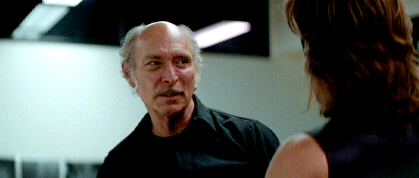
Lee Van Cleef is terrific as Police Commissioner Bob Hauk, the chief of the Liberty Island Security Control facility that admits convicts to be exiled into New York City. Van Cleef has a great presence and I could watch him verbally sparring with Russell’s Plissken for the entire film. Hauk is just as direct and unsentimental as Plissken. He is also quite ruthless in how he enlists Plissken’s cooperation.


This cast is loaded with other great names like Ernest Borgnine, Donald Pleasence, Adrienne Barbeau, Harry Dean Stanton, and Isaac Hayes. Players from other John Carpenter films, such as Tom Atkins, Charles Cyphers, Nancy Stephens, and Buck Flower, are featured in small roles. None other than Jamie Lee Curtis supplies narration to open the film and is also the automated voice at the Liberty Island prisoner admittance facility. 

While Escape from New York never preaches or teaches any lessons, it has an absolutely cynical attitude towards fascistic authority. One may try to discern a political leaning in the film, but that is probably a futile endeavor. Its only message seems to be disdain for those that would want to rule over a dysfunctional world.

Friday, November 15, 2024

TO LIVE AND DIE IN L.A. (1985)

Director: William Friedkin

Writers: William Friedkin, Gerald Petievich (adapting his novel)

Producer: Irving H. Levin

Cast: William Petersen, Willem Dafoe, John Pankow, Darlanne Fluegel, Debra Feuer, John Turturro, Dean Stockwell, Michael Greene, Steve James, Robert Downey, Sr., Christopher Allport, Valentin de Vargas, Jack Hoar, Michael Chong, Michael Zand, Jackely Giroux, Jane Leeves, Donnie Williams, Earnest Hart, Jr., Gary Cole (uncredited), Jason Ronard (uncredited) 

U.S. Secret Service agent Jimmy Hart (Michael Greene) is killed two days before his retirement by Los Angeles counterfeiter Eric “Rick” Masters (Willem Dafoe). Hart’s young partner, Richie Chance (William Petersen), vows to avenge Hart by doing anything it takes to arrest Masters. 

The Flashback Fanatic movie review 

I have almost no use for action movies anymore. I can still enjoy a vintage Clint Eastwood, Charles Bronson, or Chuck Norris flick. However, these days when almost anything one can imagine can be portrayed on the screen, the main focus for many films is just trying to outdo images of what has gone before. Spending more money on CGI and green screen effects never makes a script better. When all else fails, filmmakers will resort to shaky cam and fast cut editing to try fooling us into thinking something is evermore intense while neglecting good storytelling. All of this excess is a waste, because the action is usually so contrived that it becomes ridiculous. Worst of all is that the characters involved in these feats are usually interchangeable, snarky badasses trying to ape James Bond, Dirty Harry, and Rambo antics in films devoid of wit or grit. 

By the mid-1980s, I was already becoming aware of the action films’ idiotic excesses, as they were becoming a specific and generic genre. That’s why To Live and Die in L.A. was a refreshing kick in the ass. It is a neo-noir film and crime thriller that has style without larger-than-life heroics. Actually, the only character in the film that seems truly heroic is Jimmy Hart, the veteran U.S. Secret Service agent who is killed off early in the film. 


Probably the real reason that To Live and Die in L.A. flirts with the action film label is that it has a long and exciting car chase rivaling director William Friedkin’s other epic achievement of motorized mayhem in 1971’s The French Connection. There are no other action set pieces in the film; only brief foot chases and quick bursts of violence. What we witness are not superhuman feats and physics defying stunts, but rash and ruthless acts that give this film an edge. 

The two main protagonists are, as director Friedkin puts it, two sides of the same coin. Both U.S. Secret Service agent Richie Chance and counterfeiter Rick Masters are involved in risky professions that cross personal and legal boundaries. Chance seems driven not only by his one honorable sentiment of avenging his partner’s death; he gets an adrenalin rush facing danger. Masters affects a hip and avant-garde persona as a frustrated artist while making a living as a counterfeiter who must often resort to cold-blooded acts of violence. These two men are deliberate and unrepentant about how they achieve their objectives. It is probably no accident that both characters have similar first names. Ironically, the actors portraying them, William Petersen and Willem Dafoe, also have nearly identical first names. Dafoe’s actual given first name at birth was William. 

In this very early film role, William Petersen is really fine as our “hero.” His Richie Chance probably approaches his job as a macho challenge that gives him the same sense of satisfaction as his bungee jumping off of a bridge. Initially, we are probably going to think such a gung-ho attitude makes him someone to admire. We can also empathize with his payback agenda against Rick Masters, even if Chance steps over the legal line to try nailing him. However, Chance already has a history of ruthless behavior. He has been using parolee Ruth Lanier (Darlanne Fluegel) sexually and as his informant. If she does not cooperate, he will get her parole revoked. Frankly, U.S. Secret Service agent Richie Chance is an asshole. 


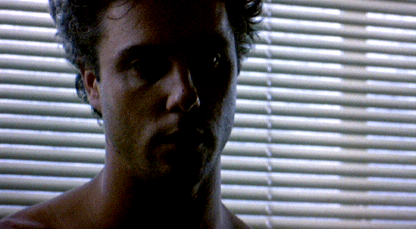
Another standout performer here who was also about to achieve stardom is Willem Dafoe. His hip and cold-blooded counterfeiter, Rick Masters, is one of my favorite villains. When dealing with anyone in his illegal line of business, he is utterly deadpan. Masters doesn’t raise his voice, even in the most violent situations, and he will savor the moment with an irreverent comment before pulling the trigger. His motivations are never explained, yet we see his artistic endeavors that he seems conflicted about. Masters might be trying to purge some inner turmoil though his art, but it is the technical application of his talents making counterfeit money that fulfill his comfortable and unconventional lifestyle. 


John Pankow, as Chance’s new partner, John Vukovich, gives us the clearest indication of just how extreme and out of control these situations have become. He wants to be a by-the-book agent, while still being loyal to his partner. Like Chance, he feels a need to prove himself, if only because he comes from a family of policemen. In a world full of sociopaths and users, Vukovich is being tested and incredibly stressed. He reminds us of the very real physical and legal dangers involved in his career and his association with his reckless, fellow agent. 


Friedkin made a deliberate choice to depict the seamy side of Los Angeles. We spend our time in taverns, a strip club, prison, warehouses, small apartments, and the streets of East L.A. The poshest accommodations shown are those of counterfeiter Rick Masters and the sleazy lawyers (Dean Stockwell and Christopher Allport) that he associates with. (Who says crime does not pay?) Striking shots of sunrises and the catchy, synthesized soundtrack by Wang Chung (Jack Hues and Nick Feldman) compliment the mood of this environment perfectly. All of this seems bleak and a bit surreal. Such an atmosphere suits the attitudes in a film that Friedkin says is about a counterfeit world; the money and the relationships in this neo-noir tale are fake.
 

Despite the stylistic trappings of the film, it always rings true. No one is portrayed as infallible and pure. The main protagonists, Chance and Masters, are polar opposites in temperament. But aside from Agent Chance’s noble goal of bringing his partner’s killer to justice, he can be just as unpleasant as the criminal Masters. Director Friedkin stated that he was depicting the very thin line between law enforcers and lawbreakers. 

This film is distinguished by its authenticity. The co-screenwriter and author of the original novel, Gerald Petievich, was actually an agent of the U.S. Secret Service. In an early scene, we see the creation of Rick Masters’ funny money; courtesy of the ex-con counterfeiter that the film employed to show us all how it is done. Unfortunately, a kid of the film’s prop master tried to pass one of the phony bills at a store, which resulted in the real U.S. Secret Service hassling director Friedkin and his poor prop master. 

To Live and Die in L.A. is an unsentimental reflection of ’80s attitude. Duty and machismo is shown to be as shallow as greed and fashion. The film plays the flip side of the crime thriller by refusing to romanticize the motives or abilities of its protagonists. It does so with a sense of style and ends on a nihilistic and almost mystic note. That makes this movie far more memorable than any of the era’s typical macho fantasies about saving the day with bullets, explosions, and wisecracks.

STANLEY (1972)

Director: William Grefé Writers: Gary Crutcher, William Grefé Producer: William Grefé Cast: Chris Robinson, Alex Rocco, Steve Alaimo, Ma...