Showing posts with label Michael Curtiz. Show all posts

Sunday, August 22, 2021

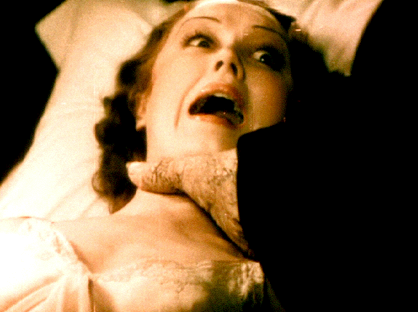
MYSTERY OF THE WAX MUSEUM (1933)

Director: Michael Curtiz

Writers: Don Mullaly, Carl Erickson, Charles S. Belden (original story)

Producers (uncredited): Henry Blanke, Hal B. Wallis

Cast: Glenda Farrell, Lionel Atwill, Fay Wray, Frank McHugh, Edwin Maxwell, Allen Vincent, Gavin Gordon, Arthur Edmund Carewe, Holmes Herbert, Claude King, Thomas E. Jackson, DeWitt Jennings, Matthew Betz, Monica Bannister 

In 1921 London, sculptor Ivan Igor’s (Lionel Atwill) waxworks museum is set on fire for the insurance money by his unscrupulous business partner Joe Worth (Edwin Maxwell). The two men fight amid the blaze, and Igor is left unconscious as the museum burns down. Twelve years later, Igor is opening a new wax museum in New York City. Due to injuries suffered in the fire that destroyed his London museum, Igor is crippled and can no longer sculpt, but he instructs other artists to do the work of recreating his exhibits. Meanwhile, newspaper reporter Florence Dempsey (Glenda Farrell) is investigating the suicide of a beautiful model (Monica Bannister) and learns that the woman’s body has disappeared from the morgue. She soon notices that the Joan of Arc wax figure in Igor’s museum bears a striking resemblance to the missing suicide victim. 

The Flashback Fanatic movie review

Mystery of the Wax Museum is director Michael Curtiz’s horror follow-up to his Doctor X (1932). It inherits many of that earlier film’s advantages, while benefiting from a more logical plot. Once again, it stars Lionel Atwill and Fay Wray, it is filmed using the innovative two-strip Technicolor process, it touches upon some pre-Code subjects that would soon be glossed over or removed from later Hollywood films, and its depression era, big city setting provides grit and energy to the proceedings.


The film even shares set pieces with the earlier Doctor X. There is another morgue scene dealt with in more sinister fashion, another shocking reveal of the movie’s menace, a strange, vast set where we learn of the villain’s weird motives, and the final battle while trying to save the damsel in distress. 


This film’s greatest attribute is Glenda Farrell. As brassy, beautiful, blonde newspaper reporter Florence Dempsey, she provides the mile-a-minute banter and the perseverance to dig out the story that leads us to the revelations behind this movie’s menace. She also provides plenty of caustic contrast to the innocence of her lovely roommate, Charlotte Duncan (Fay Wray). Despite her hard-boiled front, Farrell’s Florence Dempsey manages to be a very appealing character. Farrell would go on to star again as a feisty newswoman in the '30s Torchy Blane film series. Superman’s co-creator and writer, Jerry Siegel, was inspired by Farrell’s performances when he added reporter Lois Lane to his hero’s supporting cast of characters. 


The edgier topics touched upon by this pre-Code film are Dempsey’s potential love interest having a history of living with a woman out of wedlock and buying prohibition era bootleg booze, another character being a drug addict and the cops waiting for his withdrawal pains to make him spill some information, Dempsey snatching up a few bottles of bootleg booze right under the noses of the police and telling them that they’ll also take some for themselves, and Dempsey’s greeting to a cop reading a Naughty Stories pulp magazine, “How’s your sex life?” All of these bits ground the film in an earthy, urban environment that humanizes the characters and reminds us that this bizarre mystery is happening in a real world. 


Overall, the film’s construction is more measured and its characters more engaging than the earlier Doctor X. While both films have their very satisfying horror highlights, striking sets, and thrilling climaxes, Mystery of the Wax Museum is a bit more polished and rational as a whole. Both films are fine examples of horror in the early talkies era, and it is a shame that director Curtiz only returned to the genre once more with The Walking Dead (1936). 

When the film was remade as House of Wax (1953), it featured another contemporary cinema innovation/gimmick by being shot in full color 3-D. Like Lionel Atwill in the earlier version, House of Wax star Vincent Price would soon become a horror movie mainstay. 

Both versions are great fun, but I tend to lean toward the original. It seems just a bit more subversive and crackles with that hard-bitten, depression era energy radiating from Glenda Farrell that can always inspire a bit of hope in hard times.

Thursday, August 19, 2021

DOCTOR X (1932)

Director: Michael Curtiz

Writers: Robert Tasker, Earl Baldwin, George Rosener (uncredited), based on the 1931 play The Terror by Howard W. Comstock and Allen C. Miller

Producers: Hal B. Wallis (uncredited), Darryl F. Zanuck (uncredited)

Cast: Lee Tracy, Lionel Atwill, Fay Wray, Preston Foster, John Wray, Harry Beresford, Arthur Edmund Carewe, George Rosener, Leila Bennett, Robert Warwick, Willard Robertson, Thomas E. Jackson, Mae Busch, Harry Holman, Tom Dugan 

New York City newspaper reporter Lee Taylor (Lee Tracy) is investigating a series of grisly murders that are being committed during nights of the full moon. He discovers that the police have called in Dr. Jerry Xavier (Lionel Atwill), the director of the local surgical research academy, to examine the body of the latest victim. Dr. Xavier concludes that the latest victim, like the others, was strangled, cannibalized, and had a wound to the brain inflicted with a scalpel. Since the scalpel that was used is of a special type only available locally at Xavier’s academy, police conclude that someone at the institute must be the murderer. To avoid bad publicity for his academy, Dr. Xavier makes a deal with the police to conduct an experiment to expose the killer.

The Flashback Fanatic movie review

Warner Brothers/First National’s Doctor X is a remarkable, and sometimes outrageous, pre-Code horror film that distinguishes itself from its competition and manages to be lively, moody, and entertaining. It boasts a fantastic and fiendish climax that really hits that horror sweet spot. It should be as well remembered as the early talkie classics Dracula (1931) and Frankenstein (1931) from Universal Pictures.

Doctor X is one of the early two-strip Technicolor process films. The surreal color palette created by the limitations of that motion picture innovation lends a weird atmosphere to this feature. This technical gimmick is almost all the movie seems to be remembered for by many. This is quite unfair as Doctor X was a unique horror film, and it dealt with some edgy material that the Motion Picture Production Code would ban in film production a few years later. 

None other than Michael Curtiz directed Doctor X. Yup, the guy that made Casablanca (1942); maybe you’ve heard of it. Curtiz lavishes lots of weird angles, creepy shadows, and stark lighting upon the sets and cast. One year later, Curtiz would direct the lively and contemporary urban fright flick, Mystery of the Wax Museum (1933). His third Warner Brothers horror film The Walking Dead (1936) starred the great Boris Karloff. 


Speaking of stars, Doctor X boasts the debut horror film performances of two talents that would appear in some of the best of the genre in the '30s. Appropriately, soon-to-be scream queen Fay Wray’s first line is her trademark scream at soon-to-be horror movie reliable Lionel Atwill. Wray and Atwill would also go on to co-star in Mystery of the Wax Museum and The Vampire Bat (1933). Fay Wray achieved immortality as Ann Darrow, the beauty in the beast’s paw in King Kong (1933). Atwill would go on to play everything from mad scientists to red herrings in many more horror and mystery movies. He even starred as the evil mastermind Professor Moriarty opposite Basil Rathbone’s Sherlock Holmes in Sherlock Holmes and the Secret Weapon (1942). 

In the film’s very first scene, Doctor X establishes an eerie urban atmosphere. The foggy, nighttime, waterfront locale, with a morgue and a brothel on the same street, creates a hard-bitten environment that is mourned by the moans of ship horns. While newspaper reporter Lee Taylor’s scaredy-cat antics are meant to be the comedy relief so endemic to this film era, it also underscores the creepiness of the situation. 


What is most striking about this early scene is the casual mingling of our reporter hero Taylor in the whorehouse that he enters to make a call to his office. He is allowed the use of the phone without being a paying customer and sneaks some appreciative glances at a couple of the gals, then heads back outside to go about his business. This is the kind of streetwise camaraderie that was probably pretty typical among the working class in the big city during the hardscrabble times of the Great Depression. Later, there are also characters partaking in liquor, and Taylor makes a few quips about booze and even snags a flask to keep for “medicinal purposes.” Pre-Code films loved to tweak the noses of the temperance crowd during this prohibition era. This was still more of the working class sensibilities of the day that resonated with the audience. These were some of the attitudes that probably led to the stricter enforcement of the film censorship code beginning in 1934. Fortunately, prohibition ended by then, so movie characters weren’t condemned to drinking nothing stronger than soda pop. 

There are plenty of other edgy subjects dealt with once we arrive at Dr. Xavier’s surgical academy and are introduced to his staff of fellow doctors. This is one of the wildest aspects of the film; each of Xavier’s colleagues is made to seem as weird and potentially guilty as possible. Atwill’s Dr. Xavier also acts in a suspicious manner. In fact, each of the doctor characters are given the sort of scenes, props, and lighting that make them all seem to be mad scientists. Each of them has a rather convenient background or traumatic experience that seems perfectly appropriate for “the Moon Killer.” This is all very contrived, yet it is still quite a bit of giddy and ghoulish fun. 

However, contrivance reaches the breaking point when, as part of an experiment to determine if one of his fellow doctors is the killer, Dr. Xavier has somehow had lifelike wax figures created and brought to his country estate’s lab to put on display. These are all likenesses of the killer’s victims that Xavier hopes will elicit the reaction from the guilty man that his fantastic gizmos will detect. Just how the hell did Xavier have these wax figures created for his spur-of-the-moment experiment to expose the killer, when there is no reason they would have already been made? Perhaps Atwill’s Ivan Igor from Mystery of the Wax Museum was following the Moon Killer murders and made figures of the victims to display in his New York museum? Yeah, that’s it! Then all Xavier had to do was borrow them for his experiment! I’m a friggin’ genius! If I can figure that one out, I ought to be ingenious enough to invent my own synthetic flesh and become a porn star!

TARANTULA (1955)

Director: Jack Arnold Writers: Robert M. Fresco, Martin Merkeley, Jack Arnold, adapting Robert M. Fresco’s “No Food for Thought” script us...